Category: Yoga

  • Breathe in Balance: The Healing Power of Alternate Nostril Breathing

    Breathe in Balance: The Healing Power of Alternate Nostril Breathing

    At Zaya Wellness, we believe that healing does not always begin with something complicated. Sometimes, it begins with a single breath.

    One of the simplest and most powerful breathing techniques we recommend is Alternate Nostril Breathing, known in yoga as Nadi Shodhana. This gentle practice helps calm the mind, balance emotions, and restore inner harmony — all through conscious breathing.

    In this blog, we’ll explore what alternate nostril breathing is, its benefits, and how you can practice it daily for better mental and physical wellbeing.


    What Is Alternate Nostril Breathing?

    Alternate nostril breathing is a yogic breathing technique where you inhale through one nostril and exhale through the other, switching sides in a rhythmic pattern.

    In Sanskrit, Nadi means energy channel and Shodhana means cleansing. So, this practice literally means “cleansing the energy channels.” It is designed to balance the left and right hemispheres of the brain and regulate the nervous system.

    At Zaya Wellness, we see this practice as a bridge between the body and the soul — a simple ritual that brings you back to center.


    Benefits of Alternate Nostril Breathing

    Practicing alternate nostril breathing regularly can bring many benefits:

    🌿 1. Reduces Stress and Anxiety

    This breathing technique activates the parasympathetic nervous system, which helps calm the body. It lowers stress levels and reduces anxiety naturally.

    🌿 2. Improves Mental Clarity

    By balancing brain activity, it improves focus, concentration, and decision-making ability.

    🌿 3. Supports Emotional Balance

    When your breath is steady, your emotions become steady. This practice helps manage mood swings and emotional overwhelm.

    🌿 4. Enhances Lung Function

    It strengthens the lungs and improves respiratory efficiency over time.

    🌿 5. Promotes Better Sleep

    Practicing it before bedtime helps quiet the mind, making it easier to fall asleep peacefully.


    How to Practice Alternate Nostril Breathing (Step-by-Step Guide)

    Follow these simple steps:

    1. Sit comfortably with your spine straight.
    2. Relax your shoulders and close your eyes.
    3. Place your left hand on your knee.
    4. Use your right hand:
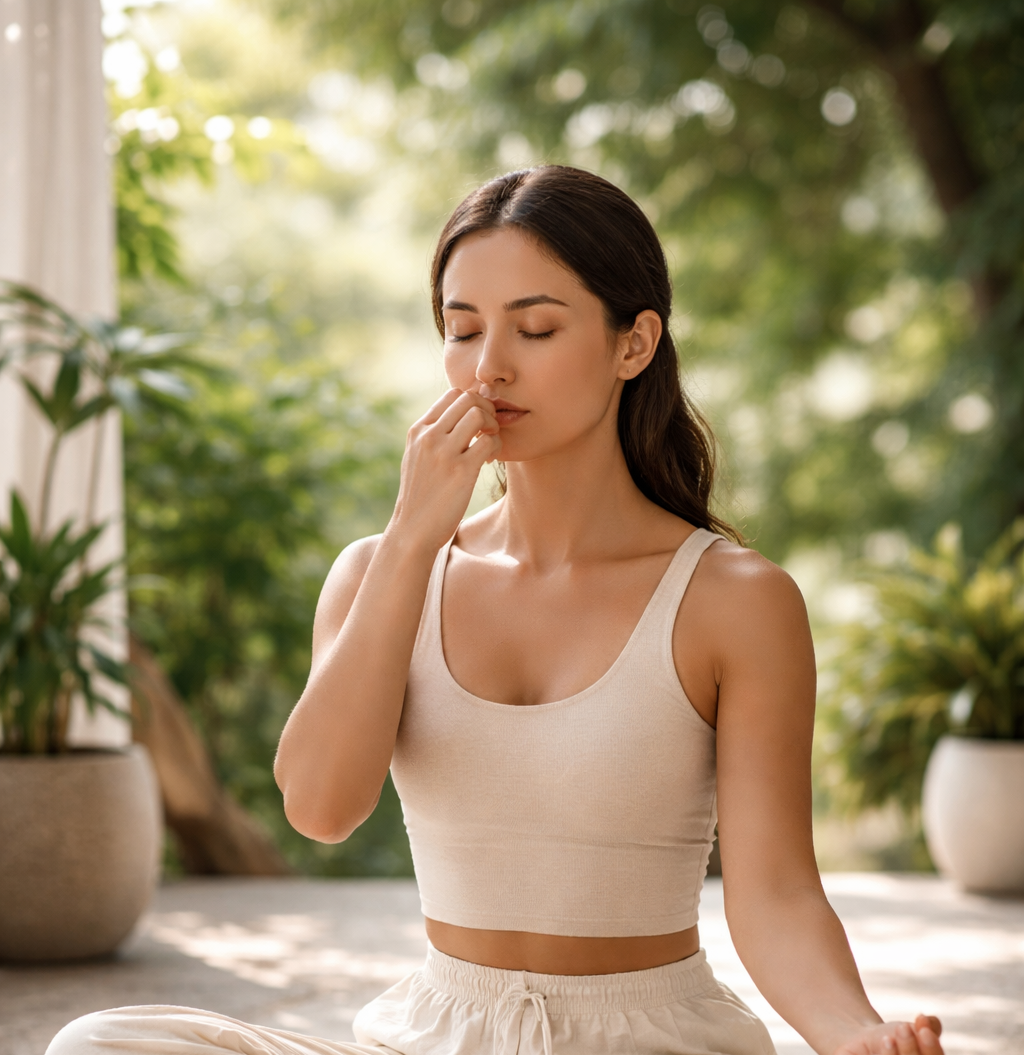
      • Close your right nostril with your thumb.
      • Inhale slowly through your left nostril.
      • Close your left nostril with your ring finger.
      • Release your right nostril and exhale slowly.
    5. Now inhale through the right nostril.
    6. Close it, open the left nostril, and exhale.

    This completes one round.

    Start with 5–7 rounds daily and gradually increase to 10–15 rounds.

    At Zaya Wellness, we recommend practicing on an empty stomach, preferably in the morning or before meditation.


    When Should You Practice Alternate Nostril Breathing?

    You can practice it:

    • In the morning to start your day calmly
    • Before meditation to deepen your practice
    • During stressful moments to regain balance
    • Before sleep to relax your mind

    Consistency is more important than duration. Even five minutes daily can create a powerful shift in your mental and emotional state.


    Who Should Avoid It?

    While alternate nostril breathing is safe for most people, those with severe respiratory infections, uncontrolled high blood pressure, or recent nasal surgery should consult a healthcare professional before practicing.

    Always practice gently. Breathing should never feel forced.


    The Spiritual Significance of Alternate Nostril Breathing

    In yogic philosophy, the left nostril represents the moon energy (calm, cooling), and the right nostril represents sun energy (active, warming). This practice harmonizes these energies within us.

    At Zaya Wellness, we see alternate nostril breathing as more than a technique — it is a reminder that balance is not found outside, but within.

    When the breath is balanced, the mind becomes quiet.
    When the mind is quiet, the heart becomes open.
    And when the heart is open, healing begins.


    Final Thoughts

    In a world that constantly pulls us outward, alternate nostril breathing gently brings us back inward. It is simple, free, and always available to you.

    At Zaya Wellness, we encourage you to make this sacred pause a part of your daily routine. Let your breath guide you toward clarity, calmness, and conscious living.

    Take a deep breath.
    Switch sides.
    And begin again. 🌿
  • Surya Namaskar: A Complete Guide to Sun Salutation for Mind, Body & Soul

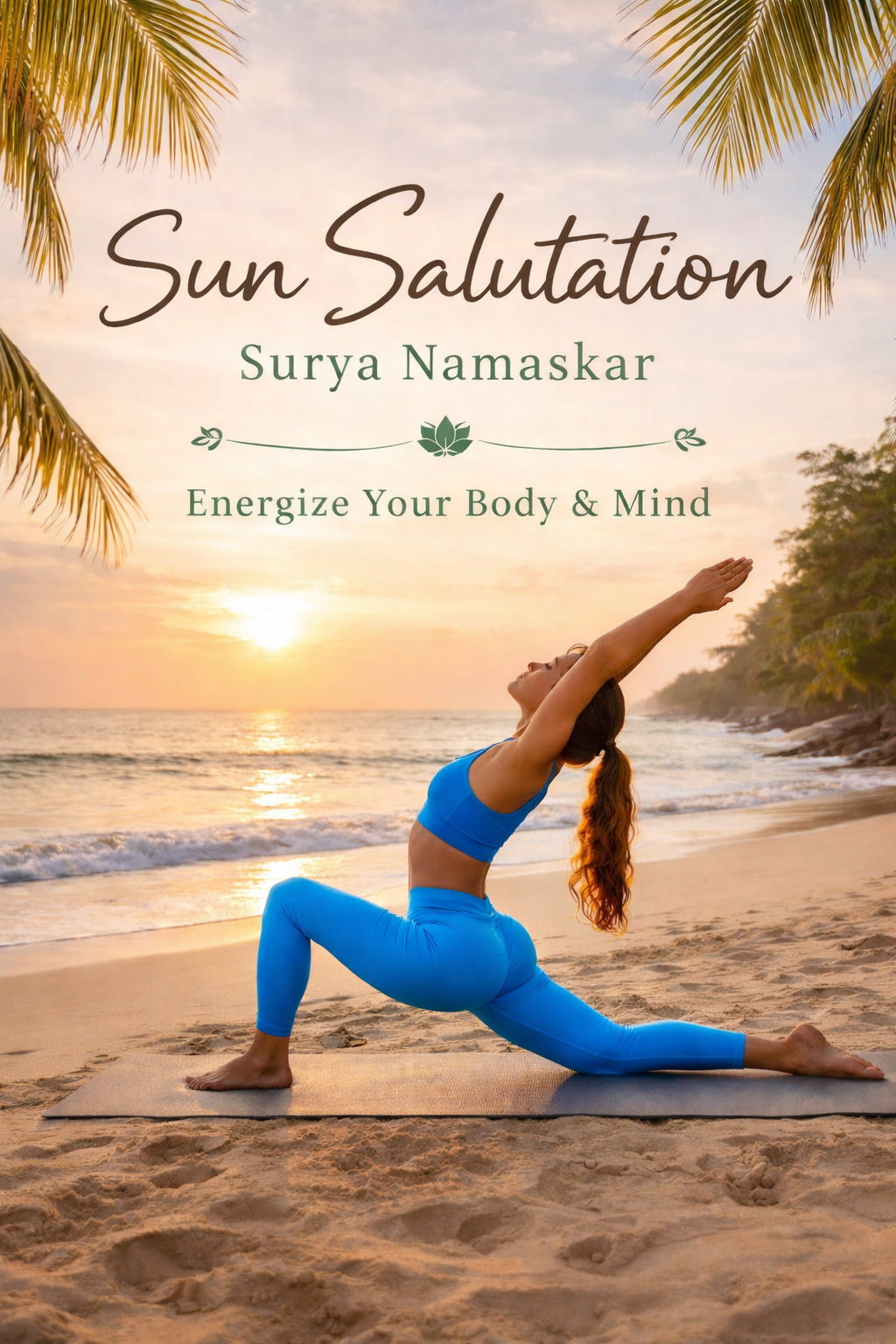
    Surya Namaskar: A Complete Guide to Sun Salutation for Mind, Body & Soul

    At Zaya Wellness, we believe that healing begins with simple, mindful practices. One such powerful practice is Sun Salutation, traditionally known as Surya Namaskar.

    More than just a yoga routine, Sun Salutation is a moving meditation that connects your body, breath, and inner energy.

    In this blog, we will explore the meaning, benefits, steps, and spiritual depth of Sun Salutation in simple language — so you can begin your practice with confidence.


    What is Sun Salutation (Surya Namaskar)?

    Sun Salutation is a sequence of 12 yoga poses performed in a smooth flow. It is traditionally practiced at sunrise to honor the life-giving energy of the sun.

    The word Surya means “Sun,” and Namaskar means “to bow down with respect.”

    At Zaya Wellness, we see Sun Salutation as a way of saying thank you to life itself — through movement, breath, and awareness.


    The 12 Steps of Surya Namaskar

    Here is a simplified breakdown of the traditional 12 poses:

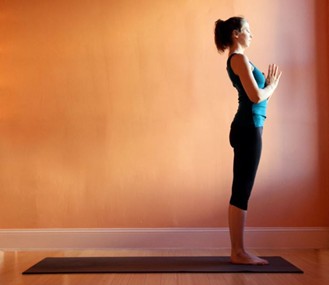
    1: Prayer Pose (Pranamasana)

    1. Keep your feet close together as you stand at the edge (in the front as you see in the picture above) of the mat and place equal weight on each foot.
    2. Just relax your shoulders while opening your chest.
    3. Take a deep breath in and raise both of your arms from the sides.
    4. Exhale and place your palms together in front of your chest in a prayer position.

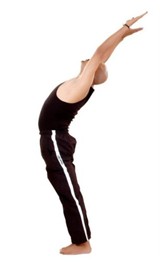
    2 Raised Arms Pose (Hastha Uthanasana)

    1. Inhale deeply as you raise your arms to your back.
    2. Make sure your biceps are in close proximity to your ears.
    3. Stretch your entire body, starting from your heels and moving up to your fingertip tips.

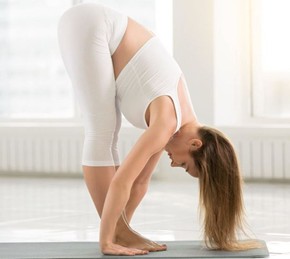
    3: Standing forward bend (Padha hasthasana)

    1. Exhale, then lean forward from the waist while maintaining a straight spine.
    2. Bring your hands to the floor next to your feet as you fully exhale.

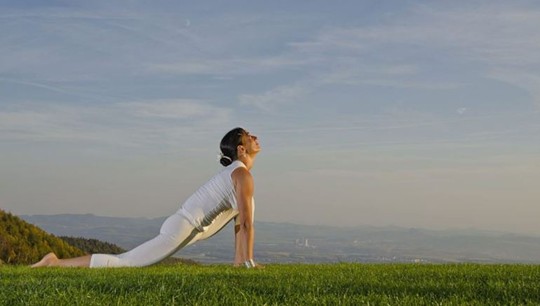
    4: Equestrian Pose (Ashwa sanchalanasana)

    1. Take a deep breath and move your right leg as far back as you can.
    2. Slowly gaze up while lowering your right knee to the floor.

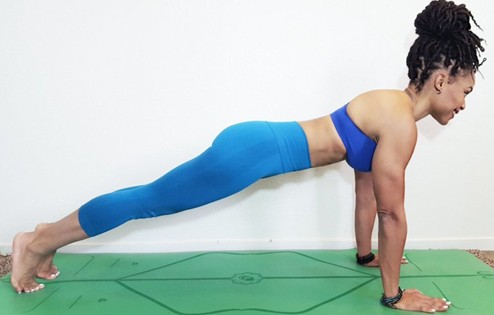
    5: Plank pose (Phalakasana)

    1. Take a deep breath in and raise your left leg.
    2. Your entire body should be in a straight line.

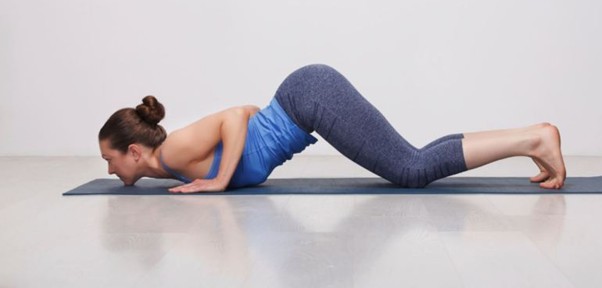
    6: Salute with 8 parts pose (Ashtanga namaskara)

    1. Exhale after gradually lowering your knees to the ground.
    2. Gently glide forward while pulling your hips back.
    3. Put your chin and chest at ease on the ground.
    4. Raise your buttocks a little bit.

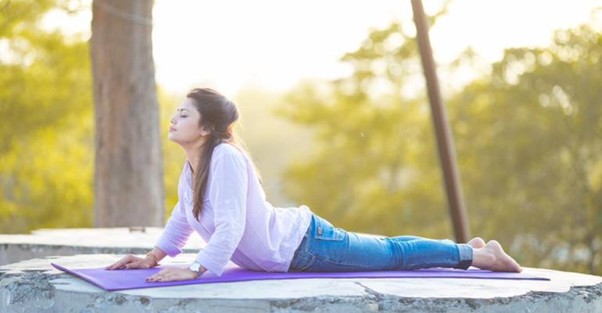
    7: Cobra Pose (Bhujangasana)

    1. Move forwards while lifting your chest.
    2. In this position, keep your elbows fixed and bent.
    3. Maintain a shoulder-to-ear distance.
    4. Look up slowly.

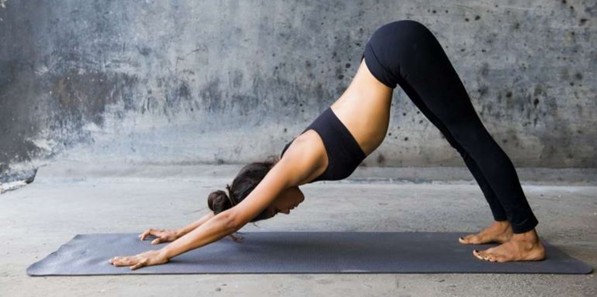
    8: Mountain Pose (Parvatasana)

    1. Take a deep breath out and raise your hips and tailbone.
    2. Make an inverted V position by lowering your chest.

    Repeat the sequence in reverse to complete one round.

    9: Equestrian Pose (Ashwa sanchalanasana)

    10: Standing forward bend (Padha hasthasana)

    11:  Raised Arms Pose (Hastha Uthanasana)

    12: Prayer Pose (Pranamasana)

    Each movement is connected with inhaling or exhaling. This combination of breath and movement makes Sun Salutation a complete yoga practice.


    Benefits of Sun Salutation

    🌿 Physical Benefits

    • Improves flexibility and posture
    • Strengthens muscles and joints
    • Boosts metabolism
    • Supports weight management
    • Improves blood circulation

    🌿 Mental Benefits

    • Reduces stress and anxiety
    • Enhances focus and clarity
    • Balances mood
    • Improves sleep quality

    🌿 Spiritual Benefits

    • Awakens inner energy
    • Activates the solar plexus (Manipura chakra)
    • Builds gratitude and mindfulness
    • Deepens self-connection

    At Zaya Wellness, we often say:
    “If you don’t have time for a long workout, give yourself 10 minutes of Sun Salutation — your body will thank you.”


    Why Practice Sun Salutation in the Morning?

    Morning practice aligns your body with natural rhythms. The rising sun symbolizes new beginnings, positivity, and vitality.

    Practicing Surya Namaskar at sunrise can:

    • Increase energy levels naturally
    • Improve digestion throughout the day
    • Create mental clarity
    • Set a positive tone for your day

    However, you can practice it anytime — consistency matters more than timing.


    How Many Rounds Should You Do?

    • Beginners: 3–5 rounds
    • Intermediate: 6–12 rounds
    • Advanced: 12+ rounds

    Always listen to your body. Sun Salutation should energize you, not exhaust you.


    Sun Salutation as Moving Meditation

    Many people see Surya Namaskar only as physical exercise. But at Zaya Wellness, we teach it as a moving prayer.

    When you:

    • Breathe consciously
    • Move slowly
    • Stay present

    Sun Salutation becomes a powerful meditation.

    You are not just stretching muscles — you are awakening awareness.


    Tips for Beginners

    ✔ Practice on an empty stomach
    ✔ Use a yoga mat
    ✔ Move with your breath
    ✔ Do not rush
    ✔ Modify poses if needed
    ✔ End with a short relaxation (Shavasana)

    If you have medical conditions like back pain, high blood pressure, or pregnancy, consult a qualified yoga instructor before starting.


    Final Thoughts: Greet the Sun Within You

    The sun shines outside — but there is also a sun within you.

    When you practice Surya Namaskar regularly, you begin to feel stronger, calmer, and more balanced. It becomes more than exercise — it becomes self-care.

    At Zaya Wellness, we invite you to begin your day with gratitude, breath, and movement.

    Start with just one round tomorrow morning.

    Let your body bow to the light — and let your soul rise with it. 🌞

  • Panchabhoota: Understanding the Five Elements of Life Through Yogic Philosophy

    Panchabhoota: Understanding the Five Elements of Life Through Yogic Philosophy

    In yogic philosophy, everything in the universe — including our body and mind — is made up of five basic elements. These elements are called Panchabhoota (Pancha = five, Bhoota = elements).

    At Zaya Wellness, we believe that true healing begins when we understand our connection with nature. The concept of Panchabhoota beautifully explains how deeply we are connected to the natural world.

    Let us explore this powerful wisdom in simple language.


    🌍 The Five Elements of Panchabhoota

    1️⃣ Earth (Prithvi) – The Element of Stability

    https://images.openai.com/static-rsc-3/3ZXnJw45PUhXCerVDsTaWn3oMOPQJnd9PKosAfP5mO2H1BG85MhEL1ijZnoNE3HgEC5PSTfxX3IveBA0nfCvkeR_dinNqKOcvN06MaeNC84?purpose=fullsize&v=1
    https://static1.squarespace.com/static/656f4e4dababbd7c042c4946/657236350931ee4538eea52c/66038737015c350a55b293a8/1712152878885/hand-positions-for-meditation-1x1.jpg?format=1500w
    https://artfactory.in/product_pictures/SW-CP188.jpg

    4

    The Earth element represents stability, strength, and grounding.
    In our body, it forms our bones, muscles, skin, and tissues.

    When Earth element is balanced:

    • We feel stable and secure.
    • We have physical strength.
    • We feel emotionally grounded.

    When it is imbalanced:

    • We may feel insecure or anxious.
    • We may feel physically weak or disconnected.

    How to balance it:

    • Walking barefoot on natural ground
    • Eating natural, whole foods
    • Practicing grounding meditation

    2️⃣ Water (Jala) – The Element of Flow

    https://images.openai.com/static-rsc-3/FofAL0WO4JNdCQ78TPG7QabHMNGJ-z-lHoIyt7ZSl1kMZHNwJb_yn988woZV6gHjT2Z53znJe2DCHsCUogJsEVWD7KQKyr9YuXm59ySge0M?purpose=fullsize&v=1
    https://png.pngtree.com/background/20250128/original/pngtree-person-doing-yoga-at-sunrise-on-a-dock-by-the-lake-picture-image_15943446.jpg
    https://images.openai.com/static-rsc-3/6MnODhyGkAbhXXyo3CVhY9IrdhzoALTgCbE6sTUzq61nDhlG-x0IiTzoyLaA7RxLViTZEI9vOWNgSAlObCL-nSpyC3_MlchjW-9MGvT41uM?purpose=fullsize&v=1

    4

    Water represents flow, adaptability, and emotions.
    Our blood, saliva, and body fluids are expressions of this element.

    When balanced:

    • We adapt easily.
    • Emotions flow naturally.
    • We feel connected and compassionate.

    When imbalanced:

    • Emotional overwhelm
    • Mood swings
    • Difficulty in letting go

    How to balance it:

    • Staying hydrated
    • Spending time near water
    • Practicing emotional expression

    3️⃣ Fire (Agni) – The Element of Transformation

    https://png.pngtree.com/thumb_back/fh260/background/20220530/pngtree-top-view-of-solar-power-plant-at-sunrisesunsetrenewable-energy-concept-photo-image_46382834.jpg
    https://images.openai.com/static-rsc-3/YeVRUw6Rb5PvBalVgprvIl7tq-vJmnYyec24SPM9oiZ1o_I9x8vjsMERgF1YBmxkm3f_5uPGrijdCR0i0w9KwbfXevBeB-ENOYjpG0GZJrQ?purpose=fullsize&v=1
    https://images.openai.com/static-rsc-3/w-hMx8H_bmZKP24jmWb8vZme29mHq8r3bQXw-QT5rW1nMomNMLxjAbPxIB3XSTuqAGNXdN-fCA7Cxqr4VA4qKPvmFUhfq_cI480pvFysWFs?purpose=fullsize&v=1

    4

    Fire symbolizes energy, digestion, and transformation.
    It governs metabolism and inner drive.

    When balanced:

    • Strong digestion
    • Clear decision-making
    • Motivation and passion

    When imbalanced:

    • Anger or irritation
    • Digestive issues
    • Burnout

    How to balance it:

    • Sun exposure (morning sunlight)
    • Breathing practices
    • Mindful eating

    4️⃣ Air (Vayu) – The Element of Movement

    https://images.openai.com/static-rsc-3/kAw-6-4l1NnIGxjBgAEimqZjgE0p9-MR9jnTGvWZ7ze2WS9U-0OqkDUQvLFgGIKAfs8In_FpHtskRdwh4XOVvUezbL_KuqGnyCQuc9aHME4?purpose=fullsize&v=1
    https://images.pond5.com/nature-background-sun-shining-through-footage-075994372_iconl.jpeg
    https://st2.depositphotos.com/1809585/7447/i/450/depositphotos_74472203-Woman-breathing-fresh-air-in-the-forest.jpg

    4

    Air represents movement, breath, and life force.
    It controls breathing, circulation, and nerve impulses.

    When balanced:

    • Clear thinking
    • Lightness in body
    • Creative ideas

    When imbalanced:

    • Anxiety
    • Restlessness
    • Overthinking

    How to balance it:

    • Pranayama (breathing exercises)
    • Slow, mindful movements
    • Spending time in fresh air

    5️⃣ Space (Akasha) – The Element of Consciousness

    https://images.openai.com/static-rsc-3/yeQTkrh9dTOeTMtOD2k3xM7Ll_WTC_nq_RQ1JOrcArSH7h-WA2WndZ5Y4YaF4eb3lorWf2NrTfzF1zaCH0DacAZbTys1BYHUg8l9jIJc7q4?purpose=fullsize&v=1
    https://dg.imgix.net/the-spiritual-discipline-of-sky-iptokbrp-en/landscape/the-spiritual-discipline-of-sky-iptokbrp-1dc8f54301afae386ac00041e83c1d41.jpg?fit=crop&h=1050&ixlib=rails-4.3.1&ts=1696349552&w=2000
    https://images.openai.com/static-rsc-3/gaKLdbunCuLTng_6BWhK5sjXCFWO8HmlmlZpnZXjwokI1Y1waLt0zRWp9-VVxioyuu3K-fpRSb43PqScVAnSwc0sKzKN16tbX_PlwyqlRHw?purpose=fullsize&v=1

    4

    Space is the most subtle element. It represents awareness, openness, and inner silence.

    It is the space within our body, mind, and the universe.

    When balanced:

    • We feel peaceful.
    • We experience clarity.
    • We feel spiritually connected.

    When imbalanced:

    • Feeling empty
    • Isolation
    • Lack of direction

    How to balance it:

    • Meditation
    • Silence practice
    • Journaling and reflection

    🌿 Why Panchabhoota Matters in Daily Life

    According to yogic philosophy, disease happens when these five elements go out of balance. Healing begins when we restore harmony.

    At Zaya Wellness, we guide our clients to:

    • Reconnect with nature
    • Understand their body signals
    • Practice mindful living
    • Align their inner elements

    When the five elements are balanced, life feels aligned — physically, emotionally, and spiritually.


    🌸 Simple Daily Panchabhoota Practice (Zaya Tip)

    Every day, try this simple routine:

    • Touch the earth (walk barefoot)
    • Drink clean water mindfully
    • Sit in morning sunlight
    • Take 10 conscious breaths
    • Spend 5 minutes in silence

    This small practice can slowly bring deep inner harmony.


    🌺 Final Thoughts

    Panchabhoota teaches us that we are not separate from nature — we are nature.

    When we respect the five elements within us, we automatically begin to live in balance.

    At Zaya Wellness, we believe that understanding ancient wisdom in simple ways can transform modern life.

    Are you ready to balance your five elements? 🌿✨

  • Panchabhoota in Fingers: Understanding the Five Elements Through Your Hands

    Panchabhoota in Fingers: Understanding the Five Elements Through Your Hands

    In yogic philosophy, our body is not just flesh and bones. It is made up of five powerful elements known as Panchabhoota — Earth, Water, Fire, Air, and Space. These elements are not just in nature; they exist within us.

    At Zaya Wellness, we believe that when you understand these five elements in your body, you begin to understand your emotions, health, and energy patterns better.

    One of the simplest ways to connect with these elements is through your fingers.

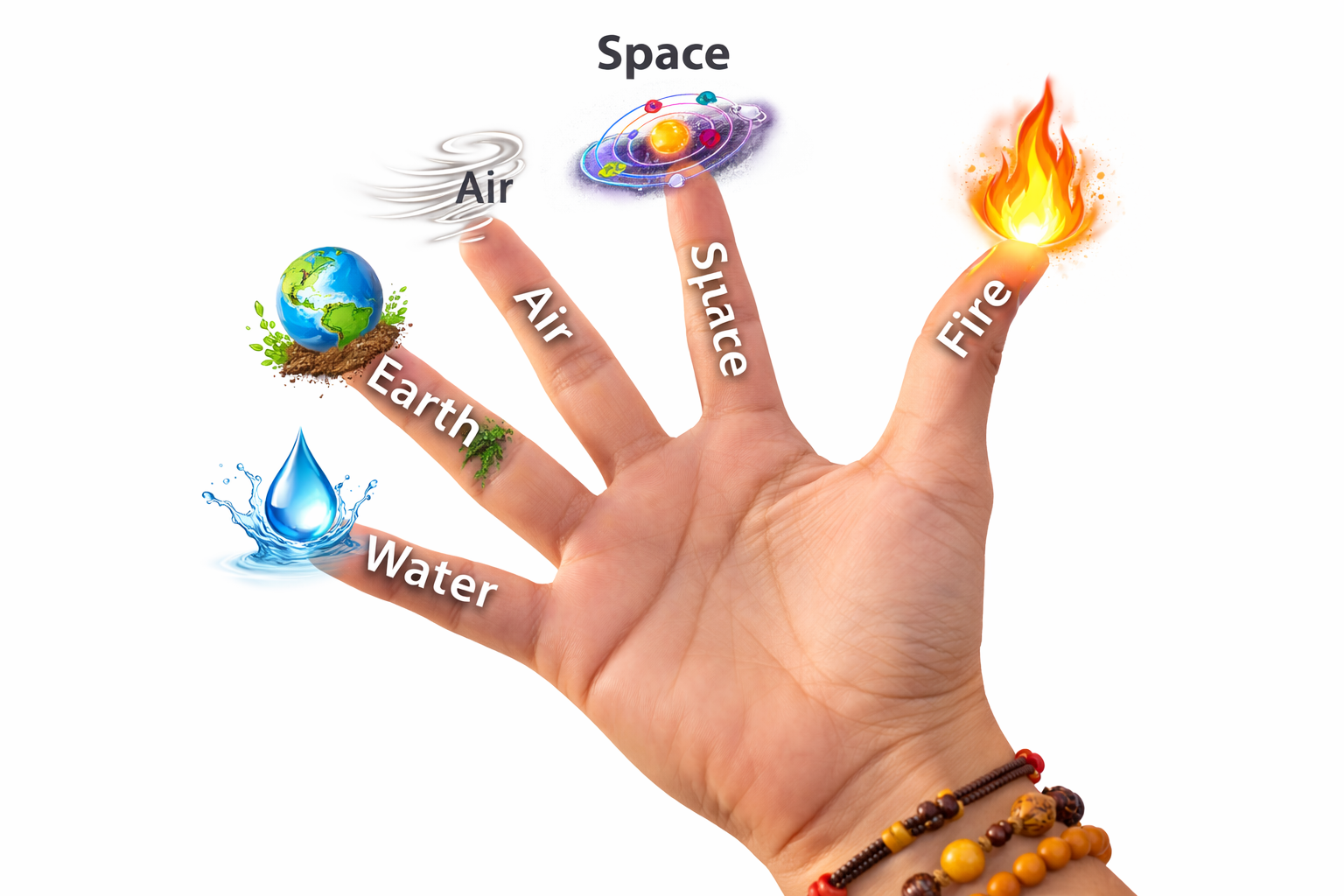
    ✋ The Five Elements in Your Fingers (Hasta Mudra Science)

    According to yogic science:

    • Thumb – Fire (Agni)
    • Index Finger – Air (Vayu)
    • Middle Finger – Space (Akasha)
    • Ring Finger – Earth (Prithvi)
    • Little Finger – Water (Jala)

    Each finger represents an element, and when we gently join fingers in specific ways (called mudras), we influence that element inside our body.

    Let’s understand this in simple language.


    🔥 Thumb – Fire Element (Agni)

    The thumb represents Fire, which governs:

    • Digestion
    • Metabolism
    • Confidence
    • Transformation
    • Willpower

    If you feel low energy, dull digestion, or lack of motivation, your fire element may need balance.

    In yogic practice, the thumb plays a major role in activating or balancing other elements.


    🌬 Index Finger – Air Element (Vayu)

    The index finger represents Air, which governs:

    • Movement in the body
    • Thoughts
    • Nervous system
    • Anxiety levels

    Too much air may show up as overthinking or restlessness. Too little may feel like mental dullness.

    Balancing this element helps calm the mind.


    🌌 Middle Finger – Space Element (Akasha)

    The middle finger represents Space, the element of expansion and openness.

    It governs:

    • Emotional space
    • Communication
    • Spiritual connection
    • Inner awareness

    When balanced, you feel spacious inside. When imbalanced, you may feel isolated or disconnected.


    🌍 Ring Finger – Earth Element (Prithvi)

    The ring finger represents Earth, the element of stability.

    It governs:

    • Strength
    • Immunity
    • Groundedness
    • Physical structure

    If you feel weak, insecure, or unstable, strengthening this element can help bring balance.


    💧 Little Finger – Water Element (Jala)

    The little finger represents Water, which governs:

    • Emotions
    • Relationships
    • Fluid balance
    • Creativity

    Too much water can make you overly emotional. Too little can make you feel emotionally dry or disconnected.


    🧘 How Mudras Work

    https://images.openai.com/static-rsc-3/uTGdQB-FOm-1OUfvk74CD5vZju8BeYG7DNaPg8OsF_7MgOPXREtVChJRILNiXZwL9dbwY2Uv__dxXHywyNOjLtpLS4mwsRlg_8joXAHhQAM?purpose=fullsize&v=1
    https://images.openai.com/static-rsc-3/yUBOz94HBS_pCQXR6mZTGP4CAwGI_QQwWT4ueV-rGVkK58IvPXjxg1IeD7WkTagF1fNmLstJWKJWLQKNYzDCfOTGvBtkwoZ8lRN-RMUIw78?purpose=fullsize&v=1
    https://images.openai.com/static-rsc-3/0Fe513gWFT7ADlRvIdstFEycDA2IjJ0gPbcOA47MJt83zt6z_22xWcFz7jLMymqU0eQGA0PtC2b7d2Fw2iWddCnDv2bL9uYqnqN515TLiVQ?purpose=fullsize&v=1

    When you gently touch specific fingers to the thumb, you either increase or reduce certain elements in your body.

    For example:

    • Gyan Mudra (Index + Thumb) – Balances Air and improves focus.
    • Prithvi Mudra (Ring + Thumb) – Strengthens Earth element and vitality.
    • Varun Mudra (Little + Thumb) – Balances Water and emotions.

    These are subtle practices, but consistent use can bring noticeable calmness and balance.


    🌿 Why This Matters in Modern Life

    Today, many of us struggle with:

    • Stress
    • Emotional imbalance
    • Low energy
    • Overthinking

    Yogic wisdom tells us these are simply signs of elemental imbalance.

    At Zaya Wellness, we guide individuals to reconnect with their inner elements — not just through theory, but through awareness and simple daily practices.

    Your hands are always with you. Through them, you carry the wisdom of the universe.


    ✨ A Simple Practice to Start

    Sit comfortably.
    Close your eyes.
    Join your thumb and index finger (Gyan Mudra).
    Take 10 slow breaths.

    Just observe.

    You may begin to feel subtle shifts — calmness, clarity, stillness.

    This is the power of Panchabhoota within you.


    🌸 Final Thoughts from Zaya Wellness

    The five elements are not abstract ideas. They are living energies within you.

    When you understand your fingers, you understand your nature.
    When you balance your elements, you balance your life.

    And sometimes, healing begins with something as simple as how you place your hands.

  • Observer Created Reality: Are You Shaping Your World Without Realizing It?

    Observer Created Reality: Are You Shaping Your World Without Realizing It?

    At Zaya Wellness, we often remind our clients of one simple truth: The way you see the world shapes the way you experience it.

    The idea of observer created reality suggests that reality is not just something happening outside of you — it is deeply influenced by your thoughts, beliefs, emotions, and awareness.

    But what does that really mean? And how does it affect your everyday life?

    Let’s explore this powerful concept in simple language.


    What Is Observer Created Reality?

    The concept of observer created reality comes from both modern science and ancient spiritual wisdom. It suggests that the act of observing something influences how it appears.

    In simple terms:

    Your attention, beliefs, and expectations shape your experience.

    When two people go through the same situation, they often experience it differently. Why? Because each person interprets the event through their own mental and emotional lens.

    Your mind is not just watching reality — it is participating in it.


    The Science Behind It

    In quantum physics, experiments like the Observer Effect show that particles behave differently when they are observed. While this does not mean we magically control everything, it does suggest that observation plays a role in how outcomes unfold.

    On a psychological level, this is even clearer:

    • If you believe people are unkind, you notice rude behavior more.
    • If you believe opportunities are everywhere, you start spotting them.
    • If you expect failure, you unconsciously act in ways that limit success.

    Your brain filters reality based on your beliefs.

    This is known as cognitive bias — and it influences how you experience life every day.


    Observer Created Reality in Daily Life

    Let’s bring this concept down to earth.

    1. Relationships

    If you believe your partner doesn’t care, you may interpret neutral actions as rejection. That belief then shapes your reaction — which affects the relationship.

    2. Health

    If you constantly focus on fear, stress hormones rise. Over time, this affects your physical health. But when you focus on safety and calm, your nervous system relaxes.

    3. Self-Image

    If you see yourself as capable, you take bold steps. If you see yourself as weak, you avoid challenges.

    Your internal world creates your external experience.


    Ancient Wisdom and Observer Consciousness

    Long before modern science, yogic and spiritual traditions spoke about the power of awareness.

    In yogic philosophy, the concept of the “Sakshi” (the witness consciousness) teaches us to observe thoughts without becoming them. When you become the observer rather than the reactor, your reality shifts.

    Instead of:
    “I am anxious.”

    You begin to say:
    “I notice anxiety.”

    That small shift changes everything.


    Are We Completely Creating Reality?

    It is important to be balanced here.

    Observer created reality does not mean:

    • You are responsible for every bad event.
    • You can control everything with thoughts alone.
    • Life is an illusion.

    It simply means:
    You influence your experience through perception.

    External events happen. But your response — and the meaning you give them — shapes your personal reality.


    How to Consciously Shape Your Reality

    At Zaya Wellness, we guide our clients to gently reclaim their observer power through practical tools:

    1. Mindfulness Practice

    Observe your thoughts daily. Ask:

    • What story am I telling myself?
    • Is this belief helping me or limiting me?

    2. Breath Awareness

    Slow breathing regulates the nervous system. A calm mind sees reality more clearly.

    3. Reframing

    Instead of asking:
    “Why is this happening to me?”

    Try:
    “What is this teaching me?”

    4. Gratitude Focus

    What you focus on grows. When you consciously notice small positives, your brain rewires to detect more of them.


    The Responsibility and the Freedom

    The idea of observer created reality is empowering.

    It means:

    • You are not helpless.
    • Your awareness matters.
    • Small inner shifts create outer change.

    When you change your perception, your behavior changes.
    When your behavior changes, your life direction changes.

    This is not magic. It is conscious living.


    A Gentle Reflection

    Pause for a moment.

    What belief are you holding right now about your life?

    Is it expanding your world — or shrinking it?

    At Zaya Wellness, we believe that true wellness begins when you realize that you are not just living in reality… you are participating in its creation.

    And when you become a conscious observer, your world becomes clearer, calmer, and more aligned with your true self.


    Final Thought

    You may not control every event.
    But you always have influence over how you see it.

    And sometimes, that is enough to transform everything.

  • 60+ and Still Strong: A Gentle Guide to Staying Physically Active with Zaya Wellness

    60+ and Still Strong: A Gentle Guide to Staying Physically Active with Zaya Wellness

    Growing older is a beautiful journey. At Zaya Wellness, we believe that turning 60 is not about slowing down — it is about moving wisely, living fully, and staying connected to your body with love and awareness.

    Staying physically active after 60 is one of the most powerful gifts you can give yourself. It supports your muscles, joints, heart, and even your emotional well-being. Most importantly, it helps you maintain independence and confidence in everyday life.

    Let us explore how you can stay active safely and joyfully after 60.


    Why Staying Physically Active After 60 Matters

    As we age, the body naturally loses muscle mass and bone strength. Joints may feel stiff. Energy levels may fluctuate. But regular movement can slow down these changes.

    Here’s how physical activity helps seniors:

    • Improves balance and reduces risk of falls
    • Strengthens bones and muscles
    • Supports heart health
    • Enhances flexibility and mobility
    • Boosts mood and mental clarity
    • Helps manage lifestyle conditions like diabetes and high blood pressure

    At Zaya Wellness, we see movement as medicine — gentle, consistent movement that nourishes rather than exhausts.


    Best Types of Exercise for People Over 60

    The key is not intense workouts. The key is consistency and awareness.

    1. Walking – The Simplest Healing Practice

    https://images.openai.com/static-rsc-3/E_U8TN_q_0d20drTN8frHfAvlYAhNDcZkx5MiaR-UwUgTISyjIl30UQKU_hDWRs048MMRnCusIsal_3KXahuLgyvF0VROMyexu3DTZbD2wA?purpose=fullsize&v=1
    https://www.verywellfit.com/thmb/ibX7cUVr7YnCGA5pJO_qPXYiaTI%3D/1500x0/filters%3Ano_upscale%28%29%3Amax_bytes%28150000%29%3Astrip_icc%28%29/vwt-skechers-slipins-go-walk-7-springtime-cathy-bixby-09-6e865fc612224679bd14445e9a4b3531.jpeg
    https://images.openai.com/static-rsc-3/bCHj5HqebFMx27BqIAFcMwxpHf3XZW7q59oTLHRRAR71NSRXkmGhK-02CPr8Ul2UAaQZ6XEoBoyVa92lLEkx6_k4ZN_xhoyJz8Ykszc9M5U?purpose=fullsize&v=1

    Walking is one of the safest and most effective exercises for seniors. A simple 20–30 minute walk daily can improve circulation, stamina, and mood.

    At Zaya Wellness, we often recommend mindful walking — paying attention to your breath, posture, and surroundings.


    2. Gentle Yoga for Flexibility and Balance

    https://images.openai.com/static-rsc-3/vwF_AiPgYsbcRI7VovWKx_v7pl-_pmN4iaA7vMWq7O-BZwHPcMZUzHqtEwSmwts3ecAWnxfxOnjTbFWwZ3jt5bFSf0Y041bTaxaQp59OH7I?purpose=fullsize&v=1
    https://images.openai.com/static-rsc-3/x6RETOy86gv2ON5274QYIwbsycDj9yA25HQ2b6xIUVFXhrIrRvuUTUmo8sGwRss6dZBMG6t_Ope_fXCCSn9jR7MWWxySLbcQYaYPCjej_M0?purpose=fullsize&v=1
    https://images.openai.com/static-rsc-3/2137hFc_DEJDGIMEPr9y1C3OGAnny00QafiNnzgWrlXXD0r6v5Z0HuWvCXXTec3TFjbRY_26k8JiB95bYr8YhdFAj_fI-v4HlIkTTV4ht88?purpose=fullsize&v=1

    Yoga improves flexibility, balance, and coordination. Simple stretches and chair yoga are excellent options for beginners.

    We encourage slow, supported movements rather than complex poses. Yoga at 60+ is not about perfection — it is about connection.


    3. Light Strength Training

    https://images.openai.com/static-rsc-3/Hw8t5gZPkLFOYSrbRP2DiCmNYmiWBCSc91Uzy0wUQNdg_GlWUQ6hkK-gV2R9RNCdUXDNOd6XtZv8sfSzRJUPf4dFHOMptCFC7ASNAWS0Ei4?purpose=fullsize&v=1
    https://images.openai.com/static-rsc-3/A-MOUcgS7z2GfMqvjVznmSFrF19g9AkSc1nKVorlqPEnqnA2i3Hq7jUmN3eivQOS7fdWhP66I5bjdk9VvLGKoDqwp5faDpXlNLXilKmQJLU?purpose=fullsize&v=1
    https://images.openai.com/static-rsc-3/k-SRRRbXdcGqonqLOIF_fLEs89dS1L3XczcLEEW1nDGUjlYsdvLn83t78-14u2RAGKa61SP6J0DbZ-2j36LKOZV_bU29WgANhDg3gJQQdTA?purpose=fullsize&v=1

    Muscle strength declines with age, but strength training can rebuild it. Using light weights or resistance bands 2–3 times a week can:

    • Improve bone density
    • Support joint stability
    • Enhance posture

    Always start slow and, if possible, seek guidance from a trained professional.


    4. Breathing and Pranayama

    https://images.openai.com/static-rsc-3/WOVc1u47lpULLnXei_fcwq72-8bVpzVL61Kmc5_a5MPpkgKmgzRxHQrW1SQAdjJ0ZMf6rsaDv-HxaCrGdIIWY-wJCEiemFwZOE_BCeyTXXU?purpose=fullsize&v=1
    https://images.openai.com/static-rsc-3/Lzs_KkA6z0hg4ROUXUWRhAv7xQgCkj6zaxzG4dnSYcWhF0uQjHFR0hMTZHiPmKBrRMDrjhi3lFhqoMlseA_8j55oPj9rJXFrErCdU8Avv6Y?purpose=fullsize&v=1
    https://images.openai.com/static-rsc-3/Kh4mInjimE3fmgqzwW8WEfR8yFe9nviItYzRbrlthi92R4O9u9AN7cxyXV3sK4-5voQtwKveW8WwrAP9PMzBRES_I_5qCnLslRDtYM0PRg4?purpose=fullsize&v=1

    Breathing exercises improve lung capacity and calm the nervous system. Even 5–10 minutes daily can reduce stress and improve overall vitality.

    At Zaya Wellness, we often combine gentle movement with conscious breathing for holistic balance.


    How to Stay Safe While Exercising at 60+

    Safety is essential. Here are a few important tips:

    • Consult your healthcare provider before starting a new routine
    • Warm up before exercise and cool down afterward
    • Stay hydrated
    • Wear comfortable footwear
    • Stop if you feel dizziness, chest pain, or unusual discomfort

    Remember — pain is not progress.


    The Emotional Benefits of Staying Active

    Physical activity is not just about the body. It reduces loneliness, improves self-confidence, and gives a sense of purpose.

    Joining group classes, walking with friends, or practicing yoga with a partner can make movement joyful.

    At Zaya Wellness, we believe true wellness is physical, emotional, and spiritual. Staying active supports all three layers.


    It Is Never Too Late to Begin

    If you are above 60 and have been inactive, start small. Even 10 minutes a day makes a difference. The goal is not intensity — it is consistency.

    Your body has supported you for decades. Now it deserves gentle care and regular movement.


    Conclusion: Age with Strength, Grace, and Awareness

    Staying physically active after 60 is not about competing with youth. It is about preserving independence, vitality, and inner joy.

    At Zaya Wellness, we encourage you to move with awareness, breathe with gratitude, and treat your body with kindness. Aging can be powerful when approached consciously.

    Your journey does not slow at 60 — it deepens.

    If you would like personalized guidance on safe exercise, yoga therapy, or holistic wellness support, connect with us at Zaya Wellness. We are here to walk this path with you.

  • Understanding Aura: What Your Energy Field Says About You

    Understanding Aura: What Your Energy Field Says About You

    In the world of holistic wellness, we often hear the word aura. But what exactly is an aura? Is it real? And how does it affect our health and emotions?

    At Zaya Wellness, we believe that healing is not just physical — it is energetic, emotional, and spiritual. Understanding your aura can help you become more aware of your inner state and improve your overall well-being.

    Let us explore this beautiful concept in simple words.


    What Is an Aura?

    An aura is believed to be the subtle energy field that surrounds every living being. Just like the body has a physical structure, it also has an energetic layer.

    You may not see it with your eyes, but you can feel it.

    Have you ever:

    • Felt calm near someone?
    • Felt uncomfortable around certain people without knowing why?
    • Entered a room and sensed heavy or light energy?

    That is energetic perception. That is aura awareness.


    What Does Your Aura Reflect?

    Your aura reflects your:

    • Emotional state
    • Mental clarity
    • Physical health
    • Spiritual balance

    When you are peaceful, confident, and healthy, your aura feels light and expansive.
    When you are stressed, angry, or unwell, your aura may feel heavy or disturbed.

    At Zaya Wellness, we often say:

    “Your energy speaks before you do.”


    Aura and the Mind-Body Connection

    In yogic and Ayurvedic philosophy, the human system is not limited to the physical body. Ancient texts describe layers of existence that include energy and consciousness.

    Your aura interacts closely with:

    • Your thoughts
    • Your breathing pattern
    • Your nervous system
    • Your lifestyle habits

    Stress hormones, negative thinking, and emotional trauma can disturb your energetic balance. On the other hand, meditation, proper breathing, gratitude, and mindful living can strengthen your aura.


    Signs of a Weak or Disturbed Aura

    While aura is subtle, you may notice certain signs when your energy feels low:

    • Constant fatigue
    • Emotional instability
    • Frequent mood swings
    • Feeling drained around others
    • Difficulty focusing

    These are not just physical symptoms — sometimes they are energetic signals asking for attention.


    How to Cleanse and Strengthen Your Aura

    At Zaya Wellness, we encourage simple and natural practices to maintain energetic balance.

    1. Conscious Breathing

    Deep, slow breathing calms your nervous system and stabilizes your energy.

    2. Meditation

    Even 10–15 minutes daily can clear mental clutter and strengthen your aura.

    3. Gratitude Practice

    Gratitude shifts your frequency from fear to abundance.

    4. Nature Connection

    Walking barefoot on earth, sitting near plants, or watching sunrise can reset your energy.

    5. Sound Healing

    Certain vibrations help clear energetic blockages and promote emotional release.


    Is Aura Scientific?

    The concept of aura comes from spiritual traditions and energy medicine systems. While modern science may not fully measure it the same way, studies on biofields, electromagnetic signals of the heart and brain, and mind-body medicine show that the human body radiates energy.

    At Zaya Wellness, we bridge traditional wisdom with practical awareness. Whether you view aura spiritually or psychologically, the message is the same:

    Your inner state matters.


    Why Understanding Your Aura Is Important

    When you become aware of your aura:

    • You become more emotionally intelligent
    • You protect your energy from negativity
    • You respond instead of reacting
    • You feel more grounded and centered

    Healing is not only about removing disease.
    Healing is about restoring harmony — within and around you.


    Final Thoughts from Zaya Wellness

    Your aura is not something mystical and distant.
    It is your living energy — shaped by your thoughts, emotions, breath, and lifestyle.

    When you care for your mind and body, your aura naturally becomes radiant.

    If you wish to explore deeper energetic balance, mindful practices, or holistic healing approaches, Zaya Wellness is here to support you.

    ✨ Your energy is your responsibility.
    ✨ Your healing begins within.

  • The Sacred Energy Pathways: Understanding Nadis in Yogic Philosophy

    The Sacred Energy Pathways: Understanding Nadis in Yogic Philosophy

    In yogic philosophy, the human body is not just physical. It is energetic, intelligent, and deeply interconnected. At Zaya Wellness, we believe that true well-being begins when we understand and balance this subtle energy system. One of the most powerful concepts in yoga that explains this energy flow is the idea of Nadis.

    Let us explore what Nadis are, why they matter, and how balancing them can transform your physical, emotional, and spiritual health.


    What Are Nadis?

    In yogic philosophy, Nadis are subtle energy channels through which Prana (life force energy) flows. The word “Nadi” comes from Sanskrit and means “flow” or “stream.”

    According to ancient yogic texts like the Hatha Yoga Pradipika and Shiva Samhita, there are 72,000 Nadis in the human energy system. These channels are not physical nerves, but subtle pathways that carry vital energy throughout the body.

    When Nadis are clear and balanced, we experience:

    • Better health
    • Emotional stability
    • Mental clarity
    • Spiritual growth

    When blocked, they may contribute to fatigue, confusion, stress, and imbalance.


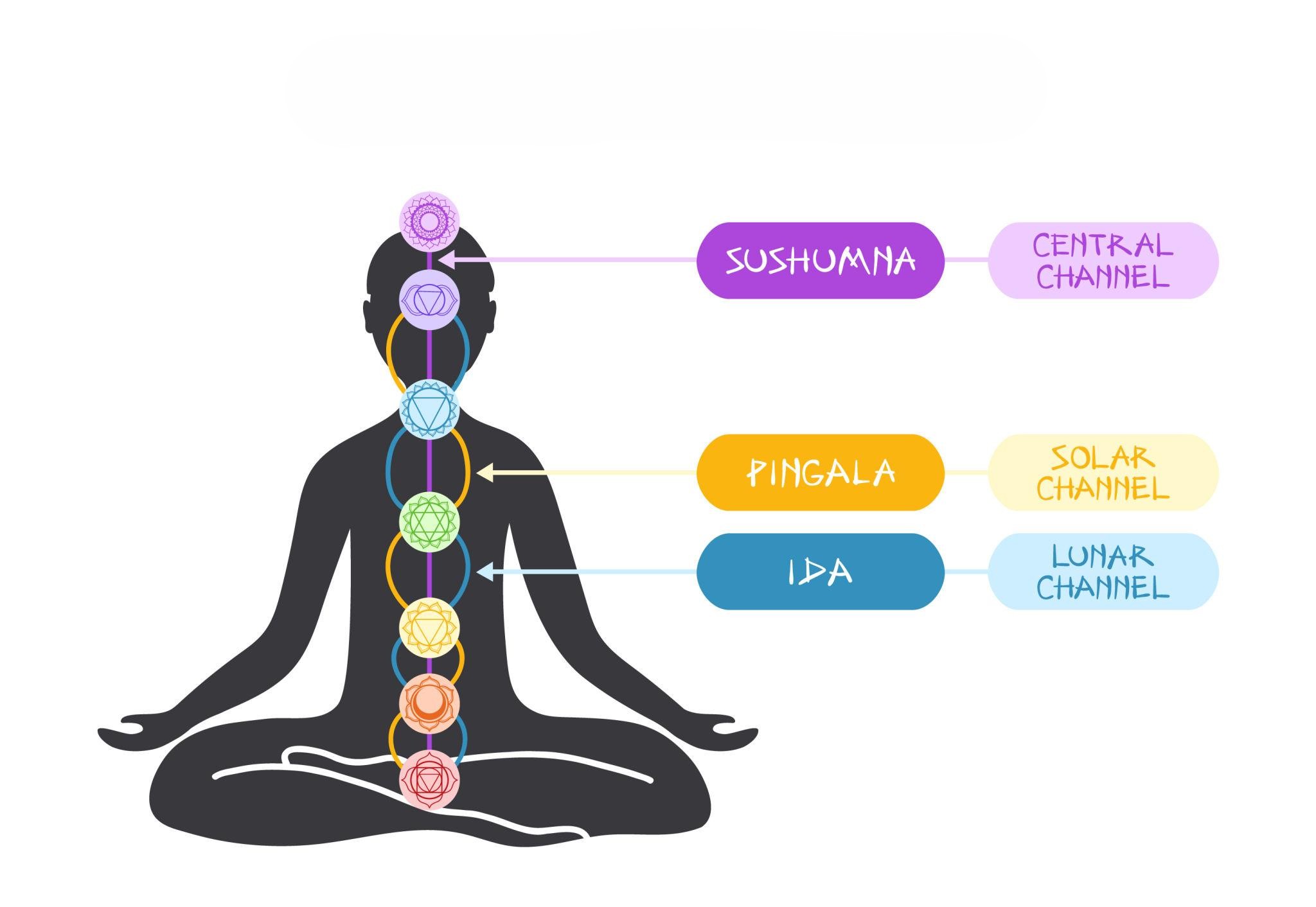
    The Three Main Nadis

    Among the thousands of Nadis, three are considered the most important in yogic philosophy:

    1. Ida Nadi – The Moon Energy 🌙

    Ida Nadi represents feminine, cooling, and intuitive energy. It flows on the left side of the spine and is associated with the right hemisphere of the brain.

    Qualities of Ida:

    • Calmness
    • Intuition
    • Creativity
    • Emotional awareness

    When Ida is dominant, we may feel relaxed and inward-focused.


    2. Pingala Nadi – The Sun Energy ☀️

    Pingala Nadi represents masculine, heating, and active energy. It flows on the right side of the spine and is connected with the left hemisphere of the brain.

    Qualities of Pingala:

    • Logic
    • Action
    • Vitality
    • Motivation

    When Pingala dominates, we feel energetic and outward-driven.

    Sushumna Nadi – The Central Channel ✨

    Sushumna is the central energy channel that runs along the spine. It is considered the pathway for spiritual awakening and higher consciousness.

    When Ida and Pingala are balanced, energy flows freely through Sushumna. This state is linked with deep meditation, clarity, and spiritual growth.


    Nadis and Chakras: How They Work Together

    The three main Nadis intersect at important energy centers known as chakras. In yogic teachings, these intersections influence both physical organs and emotional patterns.

    When the Nadis are balanced:

    • Chakras function harmoniously
    • Breath becomes steady
    • Mind becomes calm
    • Inner awareness deepens

    At Zaya Wellness, we guide individuals to gently restore this balance through breathwork, yoga therapy, mindfulness, and Ayurvedic lifestyle practices.


    Signs of Nadi Imbalance

    You may experience imbalance in your Nadis if you notice:

    • Constant overthinking
    • Emotional instability
    • Low energy or burnout
    • Difficulty focusing
    • Restlessness during meditation

    These signs are not something to fear. They are invitations to slow down and reconnect with your inner energy flow.


    How to Balance the Nadis Naturally

    Here are simple yogic practices we recommend at Zaya Wellness:

    1. Nadi Shodhana (Alternate Nostril Breathing)

    This pranayama technique helps balance Ida and Pingala.

    How to practice:

    • Sit comfortably.
    • Inhale through the left nostril.
    • Exhale through the right.
    • Then inhale right, exhale left.
    • Continue for 5–10 minutes.

    2. Gentle Yoga Asanas

    Twisting poses and spinal stretches help activate the central channel.

    3. Meditation

    Regular meditation calms Ida and Pingala, allowing Sushumna to awaken naturally.

    4. Ayurvedic Lifestyle Alignment

    Balanced diet, proper sleep, and mindful routines support smooth energy flow.


    Why Nadis Matter in Modern Life

    In today’s fast-paced world, many of us live in Pingala dominance — constantly active, stressed, and outward-focused. Others may feel stuck in Ida — overthinking and emotionally overwhelmed.

    True wellness is not about choosing one side. It is about balance.

    At Zaya Wellness, we see Nadis not as mystical concepts, but as practical tools to understand stress, mood swings, burnout, and spiritual disconnection. When we restore energetic balance, the body and mind follow naturally.


    A Gentle Reminder from Zaya Wellness

    Your body is not just muscles and bones.
    It is energy, breath, and consciousness flowing together.

    When your Nadis are clear, life flows effortlessly.

    If you wish to explore breathwork, yoga therapy, or Ayurvedic guidance tailored to your constitution, we are here to walk this journey with you.

    Let your energy flow. Let your healing begin.

  • Pancha Prana: The Five Vital Energies of Life

    Pancha Prana: The Five Vital Energies of Life

    The term “prana” refers to the vital energy or breath within the body. Prana is the pranic energy that gives life, sometimes known as the “life force,” while “ayama” is control on a more subtle level. Thus, pranayama is “Control of Breath”. By regulating the pranic energy cycles with the aid of pranayama, one can achieve a healthy body and mind. In his book of Yoga Sutras, Patanjali describes pranayama as a way to achieve higher states of awareness. He also emphasises the practise of holding one’s breath as a key step to achieving Samadhi; the 8th limb of Ashtanga Yoga.

    Types of Prana

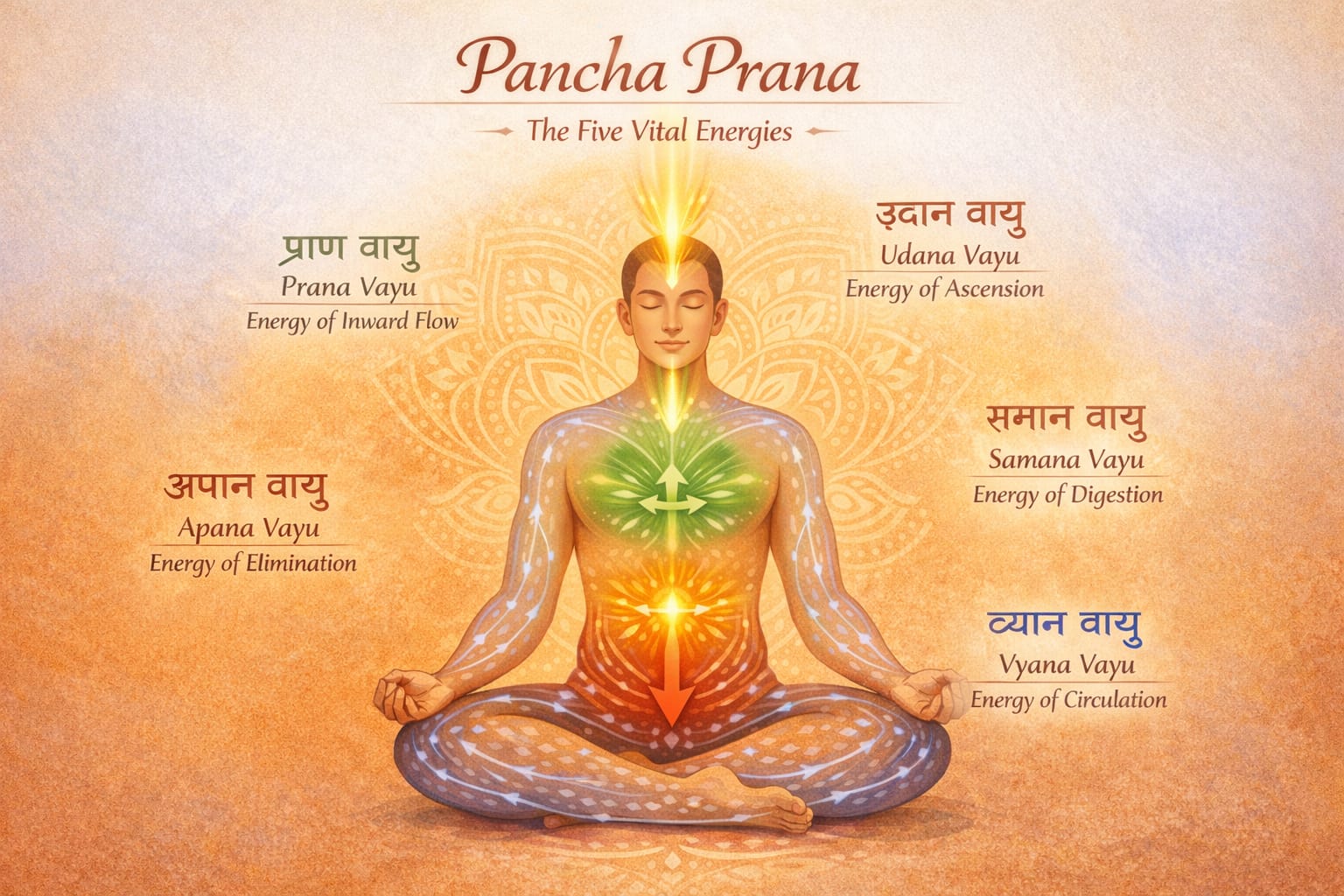
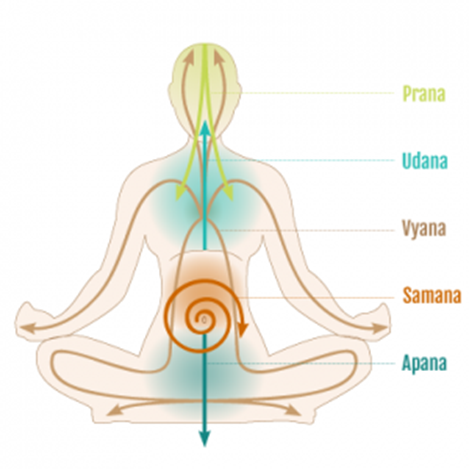
    The five forms of prana are called ‘pancha prana’ or ‘pancha maha prana’. They are:

    1. Apana
    2. Samana
    3. Vyana
    4. Udana
    5. Prana

    They are in charge of different pranic processes in the body. The most significant of these are Prana and Apana. When Apana flows downward, Prana flows upward. Pranayama practice brings these pranas’ activity into balance, which promotes both physical and mental wellness.

    Prana Vayu (Water element)

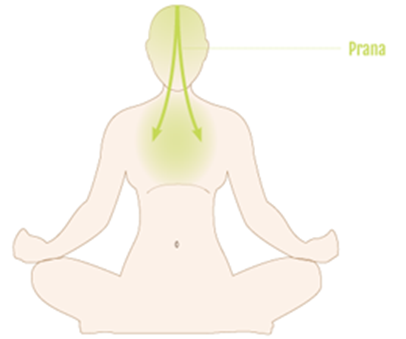
    The inwardly moving breath is known as prana vayu (not to be confused with the master Prana).

    The INTAKE is controlled by PRANA vayu. It flows within and downward, giving us the essential energy that propels us through life. It mostly resides in the heart, lungs, and head. An imbalance in the flow of prana might manifest as breathlessness, asthma, sleep apnea, heart palpitations, or stroke. Some techniques for maintaining the harmony of Prana Vayu include:

    1. Focus on Inhalation
    2. Prana breath: Take a deep breath in through your nose, eyes, ears, and third eye. Hold the breath for a second. Then, exhale through your third eye to release the energy.
    3. Contact with nature, visualizations and rituals are examples of “positive impressions.”
    4. Color therapy
    5. Sound therapy
    6. Aromatherapy
    7. The mind produces prana during meditation.
    8. Prana circulates wherever there is emptiness and silence.

    Apana Vayu (Earth Element)

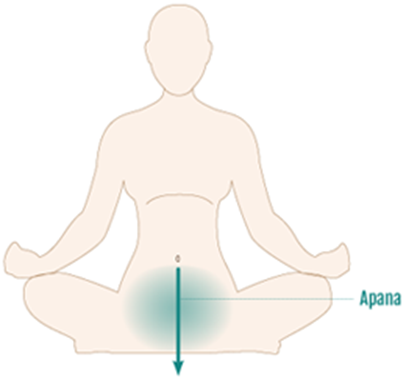
    Elimination is carried out by APANA vayu. It goes downward and outward and aids in keeping things inside. It is mainly located in the lower abdomen and is involved in functions like bone health, reproduction, and excretion (which controls mineral absorption and retention). Constipation/diarrhoea, IBS, menstruation problems, sexual troubles, and problems with bone density can all be symptoms of an imbalance in the Apana flow.

    To maintain the equilibrium of your Apana Vayu, you may try the following:

    1. Concentrate on exhaling and holding your breath (holding after exhale)
    2. Apana Breath

    Inhale: Draw energy into the abdomen

    Exhale: As you direct the energy from your belly into your feet or the ground, hold your breath for a minute.

    While doing this; focus on your root chakra.

    3, Do ‘Mula Bandha’ (Contracting pelvic area muscles).

    4. Eat wholesome foods. Consume very less or no junk food.

    Samana Vayu (Fire element)

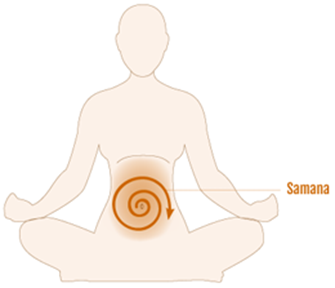
    SAMANA Vayu moves in a churning motion towards the centre and is in charge of processing things. The navel area is where it is most prominent. Every level of digestion, including the cognitive level, is under its control. It is connected to the assimilation, absorption, and digesting processes. Samana vayu function imbalances can cause problems with metabolism, poor digestion, bloating, and appetite loss.

    Try the following to put Samana Vayu on track:

    1. Concentrate on exhaling while contracting your abs.
    2. Pause in breathing (hold after Exhale)
    3. abdominal muscles gradually contracting (Zip-up)
    4. Practices similar to Uddiyana Bandha
    5. Samana breath (Imagine bringing the energy inward towards your abdomen as you inhale. As you exhale, tighten your abdominal muscles and visualise your energy becoming more concentrated).
    6. Kapalbhati pranayama (to activate agni) 
    7. Good food and fasting

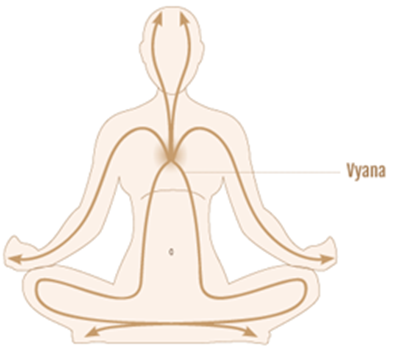
    Vyana Vayu (Space element)

    VYANA Vayu is in charge of distribution. It moves in a pulsating, circular pattern as it is released outward. It is located in the heart and lungs and is associated with the cardiac, circulatory, and voluntary nervous systems.

    Imbalances might manifest as MS symptoms, peripheral neuropathy, clogged arteries, heart attacks, and edoema.

    Vyana vayu is benefited by the following:

    1. Concentrate on expansion/exhalation and inhalation.
    2. Retaining one’s breath (hold after Inhale).
    3. Put your hands on your chest and take a Vyana breath. (Inhale: Extend your arms outward, filling your lungs from the centre out to the edges. Hold for two seconds. Exhale: Put your hands back on your chest. Maintain your attention on your heart’s centre.)
    4. The use of asanas as prana pumps.
    5. Routines that are heartfelt
    6. Rituals, prayer, and any other practise that brings you joy or touches your heart.

    Samana vayus and Vyana are the opposing powers of expansion and contraction. With Vyana, each is given a separate region of action and the ability to be separated into its constituent elements. It also maintains the nadis’ openness, clarity, cleanliness, and consistency of operation. Samana facilitates the fusion of the elements and keeps them together. Samana directs the digestive fire, or agni, with fuel that must burn evenly. 

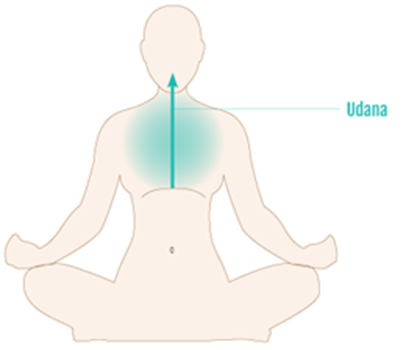
    Udana Vayu (Air element)

    The UDANA vayu is in charge of growth. It ascends as a result of other vayus functioning correctly. It regulates our ability to stand, speak, exert effort, be enthusiastic, and have will. It is concentrated near the diaphragm and throat, where it controls a number of functions related to breathing, speaking, and thinking (via facilitating blood flow to the brain). Examples of Udana vayu functional imbalances include asthma, emphysema, stuttering, hoarseness of voice, sorrow, poor memory, and a lack of creativity, direction, or goals.

    Try the following to improve Udana Vayu’s functionality:

    1. Concentrate on exhaling, especially with your diaphragmatic breathing
    2. Udana Breath (Inhale: Inhale deeply while focusing on the throat chakra. Exhale: Chant “OM”)
    3. Jalandhara Bandha-style gestures

    Conclusion

    In understanding the Pancha Prana, we begin to see that breath is not merely a biological function but a sacred bridge between body, mind, and consciousness. When these five vital forces move in harmony, life flows with clarity, vitality, and inner balance.

  • How to correct reverse breathing?

    How to correct reverse breathing?

    Reverse breathing is a dysfunctional breathing pattern where the abdomen pulls inward during inhalation and pushes outward during exhalation—the opposite of natural diaphragmatic breathing.
    Many people are unaware they breathe this way because it often develops gradually, especially during prolonged stress, anxiety, chronic pain, or trauma. Over time, the body “forgets” its natural breathing rhythm.

    Why Does Reverse Breathing Happen?
    Reverse breathing is commonly associated with:

    • Chronic stress or anxiety
    • Constant tension in the abdominal muscles
    • Poor posture or prolonged sitting
    • Past illness, surgery, or pain patterns
    • Habitual breath-holding
      When the nervous system stays in survival mode, the diaphragm becomes restricted, and breathing shifts upward into the chest.

    How Reverse Breathing Affects the Body
    This pattern can quietly strain the system and may lead to:

    • Persistent fatigue
    • Shortness of breath
    • Tightness in the chest or throat
    • Digestive discomfort
    • Heightened anxiety or panic sensations
    • Poor oxygen exchange
      The body remains in a state of alertness rather than relaxation and healing.

    How to Check if You’re Reverse Breathing
    A simple awareness test:

    1. Place one hand on your chest and one on your abdomen
    2. Inhale gently through your nose
    3. Notice what moves
      If your abdomen pulls in or stays rigid while inhaling, you may be practicing reverse breathing.
      Remember—this is not a diagnosis, only an observation.

    A Simple Method to Correct Reverse Breathing
    Correction begins with gentle retraining, not force.

    Step-by-Step Practice:

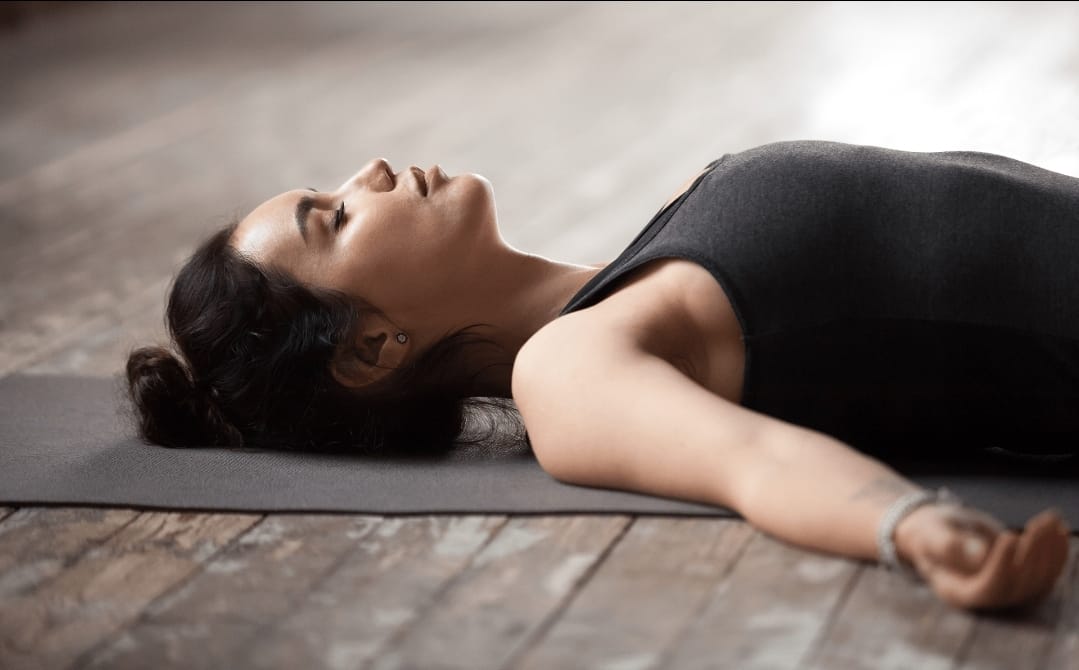
    1. Sit or lie down comfortably
    2. Place both hands on your lower abdomen
    3. Inhale slowly through the nose
    4. Allow the belly to soften and expand
    5. Imagine the breath moving downward
    6. Exhale slowly through the nose
    7. Let the abdomen naturally fall inward.(Do not push or tighten)
    8. Keep the breath slow, quiet, and relaxed
      Practice for 5 minutes, once or twice daily.

    Initially, the movement may feel unfamiliar—that’s normal.

    Important Guidelines

    • Do not force the abdomen outward
    • Keep the chest, shoulders, and jaw relaxed
    • Focus on softness rather than control
    • Progress gradually
      The goal is to restore the body’s natural rhythm, not to “fix” it aggressively.

    Supporting Habits That Help
    To reinforce healthy breathing patterns:

    • Practice nasal breathing
    • Improve posture, especially spinal alignment
    • Take short breathing pauses during the day
    • Reduce habitual abdominal gripping
    • Spend time in relaxed, mindful states

    When to Be Patient With Yourself
    Reverse breathing often reflects long-standing stress patterns. It corrects best with kindness, consistency, and safety signals to the nervous system.
    Healing breathing is less about effort and more about allowing the body to remember.

    Disclaimer:
    The information provided in this blog is for educational purposes only and does not constitute medical advice. Breathing techniques may not be suitable for everyone. If you are pregnant, have respiratory or cardiovascular conditions, or are under medical care, please consult your healthcare provider before practicing any breathing exercises.