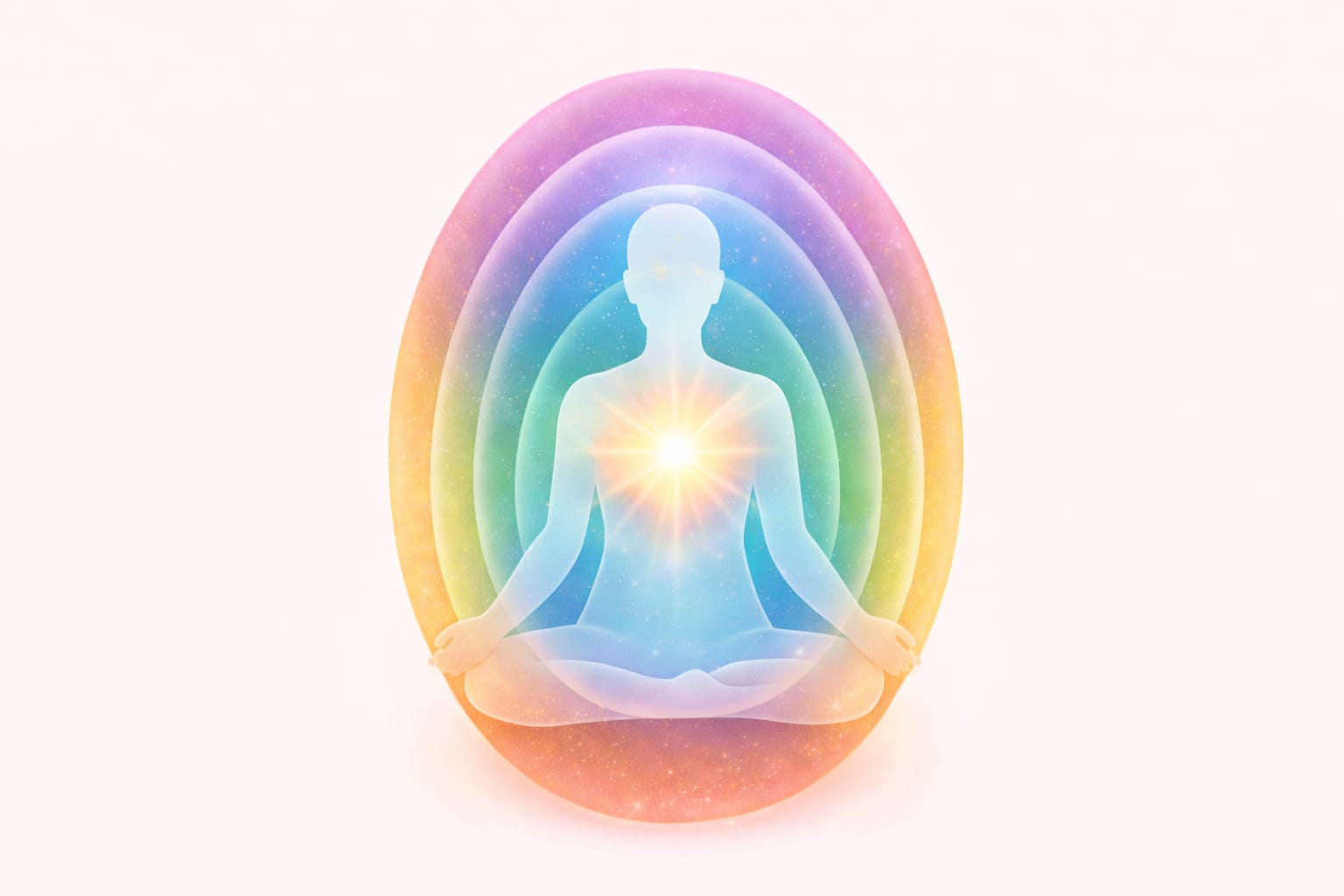
In yogic philosophy, a human being is not seen as just a physical body. According to ancient yogic texts like the Taittiriya Upanishad, we are made up of five layers or sheaths, known as Pancha Kosha (Pancha = five, Kosha = sheath or covering).
These koshas are like layers of an onion or nested boxes, where each layer influences the others. When one layer is disturbed, it affects the rest. Yoga is the path that helps us bring balance and awareness to all five layers.
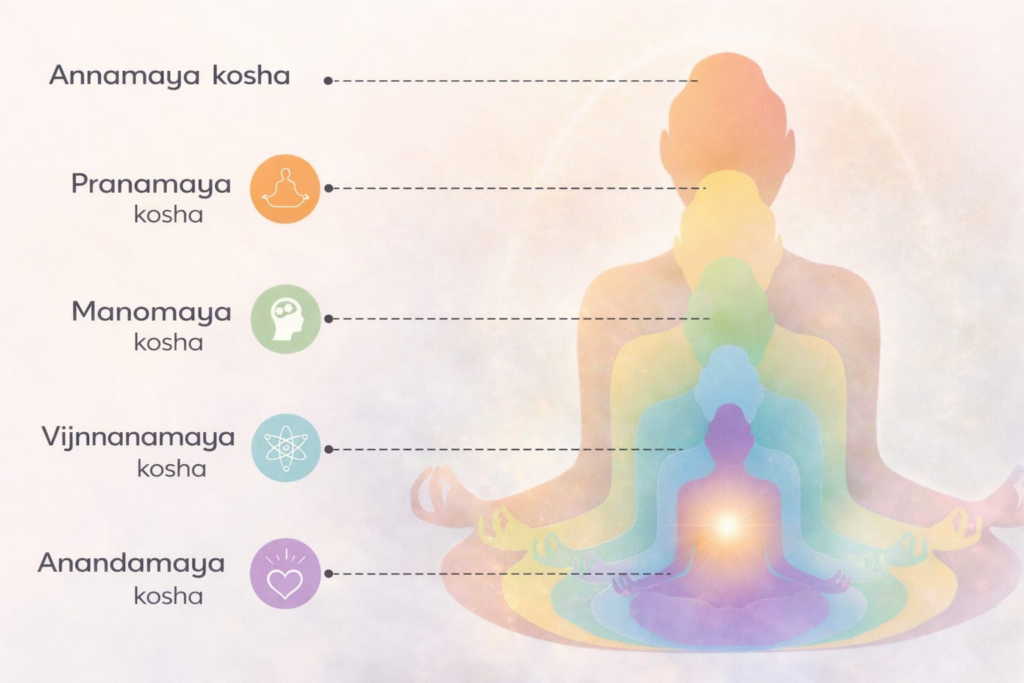
Let’s understand each kosha in simple terms with real-life examples.
- Annamaya Kosha – The Physical Body
“Anna” means food.
This is the outermost layer, the physical body made of food—bones, muscles, skin, organs. It grows through nourishment and eventually returns to the earth.
👉🏻 Real-life example:
- When you eat unhealthy food regularly, you may feel heavy, tired, or sick.
- When you eat nourishing food, exercise, and rest well, your body feels strong and energetic.
So, this kosha is cared for through: - Healthy food
- Physical movement (asanas)
- Proper sleep
Most people live mainly at this level, identifying themselves only as the body.
2. Pranamaya Kosha – The Energy Body
“Prana” means life force or vital energy.
This layer is responsible for breathing, circulation, digestion, and overall vitality. It connects the physical body to the mind.
👉🏻 Real-life example:
Have you noticed how your breathing changes when you’re anxious or angry?
Deep, calm breathing instantly makes you feel more relaxed and stable.
Practices that nourish this kosha:
- Pranayama (breathing techniques)
- Walking in fresh air
- Conscious breathing during stress
When prana flows freely, we feel alive and motivated.
3. Manomaya Kosha – The Mental & Emotional Body
This kosha deals with thoughts, emotions, reactions, fears, and memories.
👉🏻 Real-life example:
- One negative comment can ruin your mood for the entire day.
- Overthinking before sleep can make your body tired even without physical work.
This layer is shaped by: - Sensory experiences
- Beliefs and conditioning
- Emotional responses
Yoga, mindfulness, and self-observation help calm this kosha. When the mind is disturbed, even a healthy body can feel unwell.
4. Vijnanamaya Kosha – The Wisdom & Intellect Body
“Vijnana” means higher knowledge or discernment.
This is the layer of clarity, intuition, values, and inner intelligence. It helps us make conscious choices rather than impulsive reactions.
👉🏻 Real-life example:
- You feel angry, but instead of reacting, you pause and respond wisely.
- You sense that a decision may look good externally, but something inside says “this is not right for me.”
This kosha develops through:
- Self-reflection
- Meditation
- Learning from life experiences
It acts like an inner guide, helping us align actions with truth and purpose.
5. Anandamaya Kosha – The Bliss Body
“Ananda” means bliss or deep peace.
This is the innermost and subtlest layer, experienced during deep meditation, selfless love, or moments of pure presence.
👉🏻Real-life example:
- Moments of deep peace during meditation
- A feeling of completeness while watching a sunrise or holding a newborn
- Happiness without any external reason
This bliss is not excitement—it is quiet, stable, and content.
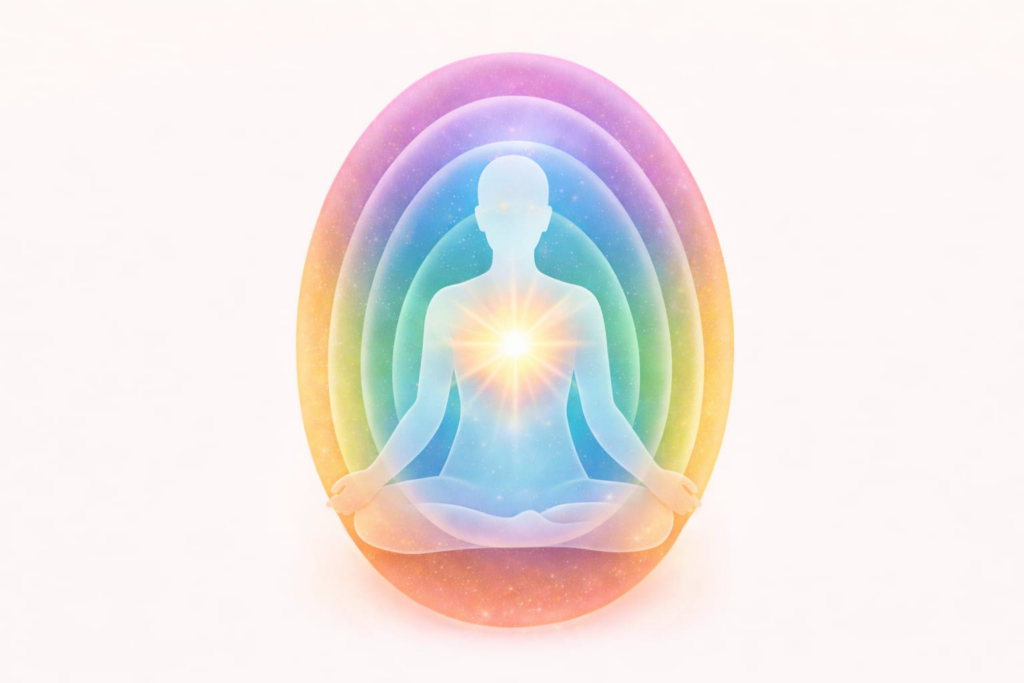
How the Koshas Work Together?
The koshas are interconnected:
- A disturbed mind affects breathing.
- Poor breathing affects physical health.
- Inner clarity can heal emotional pain.
- Deep peace can bring balance to all layers.
Yoga works holistically—not fixing just one layer, but harmonizing all five.
Why Understanding Pancha Kosha Matters Today?
In modern life, stress, illness, and emotional burnout often happen because we focus only on the physical body or mind, ignoring the deeper layers.
Understanding Pancha Kosha helps us:
- See health as holistic
- Heal from within
- Build self-awareness
- Experience deeper peace and purpose
You are not just a body.
You are body, breath, mind, wisdom, and bliss—all working together.
Yoga is the journey of moving from the outer layers to the inner self, gently and consciously.
Again, understanding the Pancha Kosha reminds us that healing and balance do not happen at just one level. As you move through your day, you may gently notice which layer of your being is asking for attention—the body seeking rest, the breath longing for space, the mind needing softness, or the deeper self calling for stillness. There is no need to fix or force anything. Awareness itself is a quiet act of care, and in that awareness, harmony naturally begins to unfold.