Tag: holistic

  • Healing a Broken Heart: A Gentle Journey Back to Yourself

    Healing a Broken Heart: A Gentle Journey Back to Yourself

    Heartbreak hurts. Whether it comes from a breakup, betrayal, loss, or disappointment, a broken heart can feel heavy, confusing, and overwhelming. It affects not only your emotions but also your sleep, appetite, focus, and even your physical health.

    At Zaya Wellness, we understand that healing a broken heart is not about “moving on quickly.” It is about moving inward gently. True healing takes time, awareness, and self-compassion.

    Let us walk through this journey together.


    What Does It Mean to Have a Broken Heart?

    A broken heart is more than emotional pain. It can feel like:

    • Tightness in the chest
    • Constant overthinking
    • Sudden waves of sadness
    • Loss of interest in daily life
    • Feeling rejected or not enough

    When love or attachment ends, the mind struggles to accept the change. The body reacts as if it has lost something deeply important — because it has.

    But here is the truth: your heart is not weak. It is wounded. And wounds can heal.


    Step 1: Allow Yourself to Feel

    Many people try to distract themselves immediately. They stay busy, avoid emotions, or pretend to be strong.

    At Zaya Wellness, we encourage emotional honesty.

    Healing begins when you allow yourself to:

    • Cry without guilt
    • Feel anger without shame
    • Sit with sadness without rushing it away

    Suppressing emotions delays healing. Expressing them safely helps release them.


    Step 2: Stop Blaming Yourself

    After heartbreak, the mind keeps replaying memories:

    • “What if I had done this differently?”
    • “Was I not good enough?”
    • “Why did this happen to me?”

    Self-blame deepens emotional wounds.

    Instead, gently remind yourself:

    • Every relationship teaches something.
    • Not all connections are meant to last forever.
    • Your worth does not decrease because someone left.

    At Zaya Wellness, we help individuals shift from self-criticism to self-understanding.


    Step 3: Reconnect With Yourself

    Often, when we love someone deeply, we lose parts of ourselves.

    Healing a broken heart is also about rediscovering:

    • Your passions
    • Your hobbies
    • Your friendships
    • Your dreams

    Ask yourself:

    • What did I enjoy before this relationship?
    • What makes me feel alive?
    • What small thing can I do today just for myself?

    Even simple self-care routines — walking, journaling, meditation — can slowly rebuild emotional strength.


    Step 4: Create Healthy Emotional Boundaries

    If possible, limit contact with the person who hurt you, at least temporarily. Constant communication reopens wounds.

    Boundaries are not punishment.
    They are protection.

    At Zaya Wellness, we guide individuals to build emotional boundaries that protect their peace while honoring their feelings.


    Step 5: Understand That Healing Is Not Linear

    Some days you will feel strong.
    Some days you will miss them deeply.
    Both are normal.

    Healing a broken heart does not follow a straight line. It moves in waves. The key is patience.

    With time, intensity reduces. What once felt unbearable slowly becomes manageable.


    The Spiritual Side of Heartbreak

    Sometimes heartbreak is life’s way of redirecting you.

    Pain can:

    • Strengthen emotional maturity
    • Deepen self-awareness
    • Teach self-love
    • Prepare you for healthier connections

    At Zaya Wellness, we believe every emotional experience carries a lesson. When you shift from “Why did this happen?” to “What is this teaching me?” healing accelerates.


    When to Seek Support

    If your broken heart leads to:

    • Severe depression
    • Anxiety attacks
    • Loss of appetite for long periods
    • Insomnia
    • Feelings of hopelessness

    Please do not suffer alone.

    Seeking support is strength, not weakness.

    At Zaya Wellness, we offer emotional guidance and holistic healing practices to help you gently rebuild from within.


    A Gentle Reminder

    Your heart may feel broken today, but it is still capable of love.

    You are not damaged.
    You are transforming.

    One day, this pain will become a chapter — not the whole story.

    And when you look back, you will realize that the heartbreak did not destroy you.
    It shaped you.

  • When Panic Attacks: Understanding the Signs and Finding Calm Again

    When Panic Attacks: Understanding the Signs and Finding Calm Again

    At Zaya Wellness, we often meet individuals who say, “I thought I was dying,” when they describe their first panic attack. The experience can be frightening, confusing, and overwhelming. But the good news is — a panic attack is treatable, manageable, and you are not alone.

    In this article, let us understand what a panic attack really is, why it happens, and how you can gently regain control.


    What Is a Panic Attack?

    A panic attack is a sudden wave of intense fear or discomfort that peaks within minutes. It can happen unexpectedly, even when there is no clear danger.

    Common symptoms of a panic attack include:

    • Rapid heartbeat
    • Shortness of breath
    • Sweating
    • Shaking or trembling
    • Chest tightness
    • Dizziness
    • Feeling like you are losing control
    • Fear of dying

    These symptoms are very real. But it is important to know that a panic attack itself is not life-threatening.

    At Zaya Wellness, we remind our clients: Your body is reacting to perceived danger, not actual danger.


    Why Do Panic Attacks Happen?

    Panic attacks occur when the body’s “fight-or-flight” system becomes overactive.

    Triggers may include:

    • Chronic stress
    • Unresolved emotional trauma
    • Major life changes
    • Health anxiety
    • Overthinking or catastrophic thinking patterns

    Sometimes, panic attacks happen without any obvious trigger. This can make them even more confusing. But the root cause often lies in accumulated stress and suppressed emotions.


    Panic Attack vs Anxiety Attack

    Many people use these terms interchangeably, but they are slightly different.

    • Panic attacks are sudden and intense.
    • Anxiety usually builds gradually and is linked to a specific worry or stressor.

    Both need understanding, not judgment.


    What To Do During a Panic Attack

    At Zaya Wellness, we guide our clients with simple grounding techniques that help calm the nervous system.

    1. Focus on Your Breath

    Try this:

    • Inhale slowly for 4 seconds
    • Hold for 4 seconds
    • Exhale for 6 seconds

    Repeat gently. Your breath is your anchor.

    2. Ground Yourself

    Name:

    • 5 things you see
    • 4 things you feel
    • 3 things you hear
    • 2 things you smell
    • 1 thing you taste

    This brings your mind back to the present moment.

    3. Remind Yourself

    Say softly:
    “This is uncomfortable, but it will pass.”

    Because it will.


    Long-Term Healing From Panic Attacks

    Managing panic attacks is not only about handling the moment. It is about healing the root.

    At Zaya Wellness, we work on:

    • Emotional awareness
    • Nervous system regulation
    • Mindfulness practices
    • Breathwork
    • Lifestyle balance
    • Thought pattern restructuring

    When the nervous system feels safe consistently, panic attacks reduce in frequency and intensity.


    When Should You Seek Help?

    If panic attacks:

    • Occur frequently
    • Interfere with daily life
    • Make you avoid certain places
    • Cause ongoing fear of “the next attack”

    It is important to seek professional guidance.

    There is no shame in asking for help. In fact, it is a sign of strength.


    A Gentle Reminder

    A panic attack does not mean you are weak.
    It does not mean you are broken.
    It does not mean you are “losing your mind.”

    It means your nervous system is overwhelmed.

    And overwhelmed systems can heal.

    At Zaya Wellness, we believe healing begins with awareness, compassion, and the right support. If you or someone you love is struggling with panic attacks, know that recovery is possible — step by step, breath by breath.

  • Who Am I? A Spiritual Journey to Discover Your True Self

    Who Am I? A Spiritual Journey to Discover Your True Self

    In the rush of daily life, we often introduce ourselves by our name, profession, roles, or relationships.
    But have you ever paused and asked yourself — Who am I, really?

    At Zaya Wellness, we believe this is not just a philosophical question. It is the beginning of true spiritual awakening and inner peace.


    Why “Who Am I?” Is the Most Important Spiritual Question

    From ancient spiritual traditions to modern mindfulness practices, the question “Who am I?” has guided seekers toward self-realization.

    We usually identify ourselves as:

    • A body
    • A mind full of thoughts
    • A bundle of emotions
    • A personality shaped by experiences

    But is that all we are?

    Spiritual wisdom gently reminds us:
    You are not just your body.
    You are not just your thoughts.
    You are not your fears, success, or failures.

    You are something deeper. Something constant.


    Understanding the True Self

    Close your eyes for a moment.

    You can observe your thoughts.
    You can notice your emotions.
    You can feel your body.

    If you can observe them, that means you are separate from them.

    So who is the observer?

    In spiritual understanding, the real “You” is pure awareness — the silent witness behind every experience. It is the consciousness that remains unchanged, even as your life circumstances change.

    At Zaya Wellness, we call this your True Self — the peaceful, limitless presence within you.


    Why We Forget Who We Truly Are

    Life conditions us from childhood:

    • “Be successful.”
    • “Be strong.”
    • “Don’t show weakness.”
    • “This is who you are.”

    Over time, we build an identity based on labels and expectations. Slowly, we forget our natural state of peace and wholeness.

    Stress, anxiety, comparison, and self-doubt arise when we live only from this limited identity.

    Spiritual growth begins the moment we question it.


    How to Begin the Journey of Self-Discovery

    At Zaya Wellness, we guide individuals toward self-awareness through simple, practical steps:

    1. Practice Self-Inquiry

    Ask yourself gently:
    “Who is feeling this?”
    “Who is thinking this thought?”

    This shifts you from the mind to awareness.

    2. Embrace Silence

    Spending time in meditation allows you to experience the space beyond thoughts.

    3. Observe Without Judgment

    Instead of reacting, start observing your emotions. Awareness itself brings healing.

    4. Connect with Mindful Living

    When you live consciously — eating, walking, speaking with awareness — you reconnect with your inner self.


    What Happens When You Discover Who You Truly Are?

    When you realize your true nature:

    • Fear begins to dissolve
    • Inner peace becomes natural
    • You stop seeking validation
    • You respond instead of react
    • You feel connected to everything

    This realization is not about gaining something new.
    It is about remembering what you have always been.


    “Who Am I?” — The Answer Is Within

    The spiritual journey is not about becoming someone else.
    It is about uncovering your authentic self.

    You are not broken.
    You are not incomplete.
    You are awareness, peace, and presence itself.

    At Zaya Wellness, our mission is to help you reconnect with this truth — gently, compassionately, and practically.

    If this question resonates with you, perhaps your journey has already begun.


    Final Thoughts

    The question “Who am I?” is simple.
    But living the answer transforms your entire life.

    Take a deep breath.
    Sit in stillness.
    Listen within.

    The answer has always been there.

  • The Cosmic Dance: Awakening to the Rhythm of the Universe

    The Cosmic Dance: Awakening to the Rhythm of the Universe

    In the vast silence of the universe, there is movement. In stillness, there is rhythm. This eternal movement is what ancient wisdom calls The Cosmic Dance — a sacred expression of creation, preservation, and transformation.

    At Zaya Wellness, we believe spirituality is not separate from life. It flows through every breath, every heartbeat, and every experience. The idea of the Cosmic Dance beautifully reminds us that we are not isolated beings — we are part of a greater universal rhythm.


    What Is the Cosmic Dance?

    The Cosmic Dance symbolizes the continuous flow of energy in the universe. Everything is in motion — planets revolve, oceans rise and fall, seasons change, and even our thoughts move in cycles. This universal movement is not chaotic; it follows a divine rhythm.

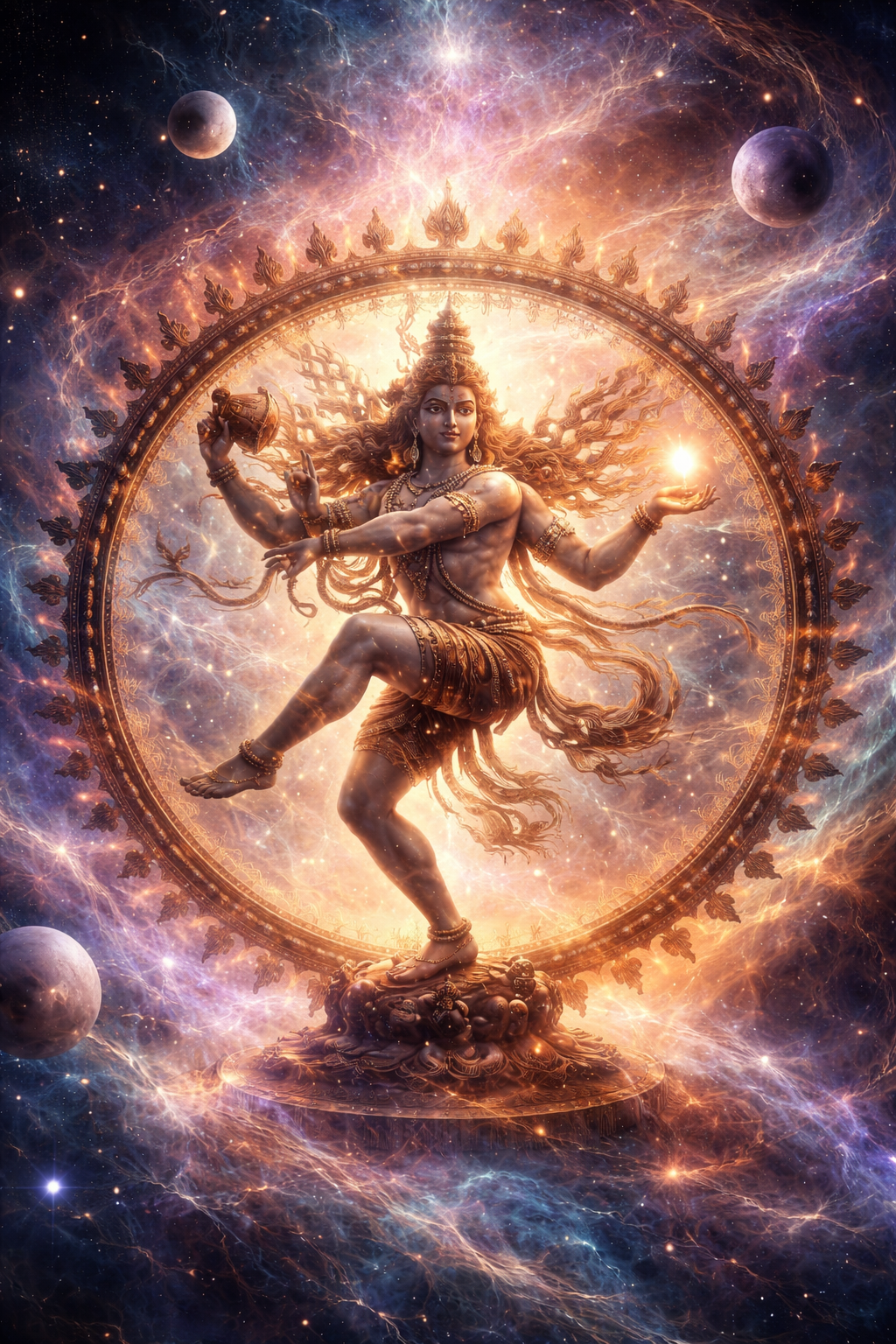
    In Hindu spiritual philosophy, the Cosmic Dance is most beautifully represented by Shiva as Nataraja, the Lord of Dance.

    https://images.openai.com/static-rsc-3/T3KEbEXmuNcQcVRnaNW3KxpzWx8EvYPIVfQj3QxvJydvSUOTPfHkUJeZ8wI1f42U_kD44Zf6LmyYqSj5SFtfdGpW4qUFaO24fyCtArxrmRw?purpose=fullsize&v=1
    https://images.openai.com/static-rsc-3/3tz4zSyRe1ARlfbRl1zQTB__pi2epVIeCBvY54rtCBWx9-muHvBdL6HEQROY0WUlSF2WM_ukARPken_8gg4i7X2JGc1ZA-LepNKS9WnJ7r4?purpose=fullsize&v=1
    https://images.openai.com/static-rsc-3/4l_-Nh7Tx4kPSy8FkUYliIJeKBu09mV5BcKxt1sQmwR7pIFaFByaiiSqJ6rqvt368Szfnxw1HvAB6jFZehBDJOrjuzDSInStrrZqIRUuOuM?purpose=fullsize&v=1

    4

    In this sacred form:

    • The raised hand symbolizes protection.
    • The fire represents destruction of ignorance.
    • The lifted foot offers liberation.
    • The circle of flames represents the cosmos itself.

    The dance is not destruction in a negative sense — it is transformation. Old forms dissolve so new beginnings can arise. Just like in our own lives.


    The Spiritual Meaning Behind the Cosmic Dance

    The Cosmic Dance teaches us three powerful truths:

    1. Everything Is Energy

    Modern science speaks of atoms constantly moving. Ancient sages spoke of universal life force. Both point to the same truth — nothing is truly still.

    2. Change Is Sacred

    We often resist change. But the Cosmic Dance reminds us that transformation is natural. Growth happens when we allow life to move through us.

    3. We Are Part of the Whole

    You are not separate from the universe. Your breath aligns with the rhythm of existence. When you meditate, practice yoga, or sit in silence, you begin to feel this connection.

    At Zaya Wellness, we guide individuals to experience this rhythm within — through mindful practices, breathwork, and spiritual awareness.


    The Cosmic Dance Within You

    The Cosmic Dance is not just a mythological symbol. It is happening within you right now.

    • Your heart beats in rhythm.
    • Your lungs expand and contract.
    • Your emotions rise and fall.
    • Your life moves through phases.

    When you learn to move with life instead of against it, you begin to experience peace.

    Through meditation and conscious living, we can align ourselves with this universal dance. When alignment happens, stress reduces, clarity increases, and a deep sense of belonging emerges.


    How to Experience the Cosmic Dance in Daily Life

    At Zaya Wellness, we encourage simple spiritual practices that help you tune into the cosmic rhythm:

    • Mindful Breathing – Feel the flow of life entering and leaving your body.
    • Gentle Movement or Yoga – Let your body move naturally, without force.
    • Silent Reflection – Observe your thoughts without judgment.
    • Gratitude Practice – Recognize the beauty of life’s cycles.

    When practiced regularly, these habits help you realize that life is not something to control — it is something to experience.


    Why the Cosmic Dance Matters Today

    In a fast-paced world filled with noise and pressure, we often feel disconnected. The wisdom of the Cosmic Dance reminds us that even chaos has purpose. Every ending carries a seed of new creation.

    When we understand this, fear softens. Trust grows. And life feels lighter.

    At Zaya Wellness, our mission is to help you reconnect with this inner rhythm — to live with awareness, balance, and spiritual strength.


    Final Reflection

    The Cosmic Dance is not happening somewhere far away in the heavens. It is unfolding within you.

    When you close your eyes and listen deeply, you may feel it — the silent rhythm that connects you to everything.

    And in that awareness, you discover peace.

  • The Weight on Your Shoulders: Learning to Put It Down

    The Weight on Your Shoulders: Learning to Put It Down

    In today’s fast-moving world, many of us carry an invisible burden — the weight on our shoulders. It may not be something others can see, but we feel it deeply. Responsibilities, expectations, past regrets, future worries — all of it settles quietly within us.

    At Zaya Wellness, we believe this weight is not just physical or emotional. It is philosophical. It is the story we tell ourselves about who we must be, what we must achieve, and how much we must endure.

    Let’s pause and explore this gently.


    What Is the “Weight” We Carry?

    The weight on your shoulders is not just stress. It is:

    • The pressure to succeed
    • The fear of disappointing others
    • The need to always appear strong
    • The silent comparisons
    • The guilt of not doing “enough”

    Over time, this weight becomes part of our identity. We forget what it feels like to stand tall without tension.

    But here is the truth — not all weight is yours to carry.


    Why Do We Hold On to It?

    Philosophically, human beings often equate struggle with worth. We believe:

    • If I am burdened, I must be responsible.
    • If I am stressed, I must be important.
    • If I am tired, I must be working hard enough.

    But what if this belief itself is the heaviest weight?

    At Zaya Wellness, we gently remind our community that your value is not measured by how much you can endure. Your worth is not proven through exhaustion.


    The Illusion of Control

    Much of the weight we carry comes from trying to control everything — outcomes, opinions, timelines, even other people’s emotions.

    Yet life has its own rhythm.

    When we resist uncertainty, our shoulders tighten.
    When we demand perfection, our minds grow heavy.
    When we try to carry the world alone, we forget we are part of it — not responsible for it.

    Letting go does not mean giving up. It means trusting life a little more.


    How to Lighten the Weight on Your Shoulders

    At Zaya Wellness, we encourage simple, mindful shifts:

    1. Pause and Notice

    Ask yourself:
    Is this truly mine to carry?

    Sometimes awareness alone begins the release.

    2. Redefine Strength

    Strength is not silent suffering.
    Strength is knowing when to rest.

    3. Release Perfection

    You are allowed to be a work in progress. Growth does not require self-punishment.

    4. Breathe Into the Present

    Most of our burdens come from the past or the future.
    The present moment is surprisingly light.


    A Gentle Reminder

    Imagine physically placing the weight you carry onto the ground.
    What would remain?

    You would still be capable.
    You would still be worthy.
    You would still be enough.

    The weight is not your identity.

    At Zaya Wellness, our philosophy is simple: healing begins when we stop carrying what was never meant to define us. Wellness is not about becoming stronger to bear more — it is about becoming aware enough to carry less.


    Final Thoughts

    The world may place expectations on you. Society may measure success in numbers and milestones. But your inner peace is more valuable than any external validation.

    Today, take one conscious breath.
    Relax your shoulders.
    Notice the tension.

    And gently — even if just for a moment — put the weight down.

    You deserve to stand light.

  • Do You Have Time? – Or Is Time Having You?

    Do You Have Time? – Or Is Time Having You?

    In today’s fast-moving world, one sentence has become very common:

    “I don’t have time.”

    We say it when we skip workouts.
    We say it when we ignore our emotions.
    We say it when relationships need attention.
    We even say it when our own health asks for care.

    But let us pause for a moment and gently ask —
    Do you really not have time? Or are you not giving time to what truly matters?

    At Zaya Wellness, we often see that the real issue is not lack of time. It is lack of awareness.


    What Does “Not Having Time” Really Mean?

    When someone says, “I don’t have time,” it usually means:

    • I feel overwhelmed.
    • I am constantly busy.
    • I don’t know how to prioritise.
    • I am emotionally exhausted.
    • I am running on autopilot.

    Time is the same for everyone — 24 hours.
    But energy, clarity, and emotional balance differ.

    When your mind is cluttered, even one hour feels short.
    When your mind is calm, even a few minutes feel enough.


    The Hidden Cost of “No Time”

    Saying “I don’t have time” repeatedly affects different areas of life:

    1️⃣ Health

    Skipping meals, exercise, rest, and regular checkups slowly impacts your body. Stress hormones rise. Fatigue increases.

    2️⃣ Relationships

    Conversations become shorter. Emotional connection weakens. Small misunderstandings grow bigger.

    3️⃣ Career

    Burnout becomes common. Productivity drops. Creativity fades.

    4️⃣ Mental Wellbeing

    Anxiety increases. Sleep suffers. Inner peace feels distant.

    At Zaya Wellness, we believe that time mismanagement is often emotional mismanagement.


    Why We Feel We Don’t Have Time

    Here are some deeper reasons:

    • Fear of slowing down
    • Addiction to productivity
    • Guilt when resting
    • Poor boundaries
    • Overcommitment
    • Lack of self-awareness

    Sometimes staying busy is easier than sitting quietly with our thoughts.

    But avoiding yourself does not create more time — it creates more stress.


    How to Create Time (Without Adding More Hours)

    You cannot increase time.
    But you can increase presence.

    Here are simple, practical steps we guide our clients with at Zaya Wellness:

    🌿 1. Start with 10 Minutes for Yourself

    Don’t aim for one hour. Start small.
    10 minutes of silence, breathing, journaling, or stretching.

    Consistency matters more than duration.

    🌿 2. Identify Energy Drainers

    Notice what drains you:

    • Social media scrolling?
    • Negative conversations?
    • Saying “yes” when you mean “no”?

    Protect your energy. Time will automatically feel larger.

    🌿 3. Practice Conscious Pauses

    Before saying “I don’t have time,” pause and ask:

    • Is this truly important?
    • Am I avoiding something?
    • Can I reschedule instead of cancelling?

    Awareness changes everything.

    🌿 4. Schedule Self-Care Like a Meeting

    If it’s not in your calendar, it won’t happen.
    Block time for:

    • Exercise
    • Meditation
    • Family conversations
    • Therapy or healing sessions

    Treat it as non-negotiable.

    🌿 5. Redefine Productivity

    Rest is productive.
    Healing is productive.
    Saying no is productive.

    At Zaya Wellness, we help individuals move from “I am busy” to “I am balanced.”


    The Truth About Time and Inner Peace

    Time is not the enemy.
    Disconnection is.

    When you are disconnected from your body, emotions, and priorities, life feels rushed.

    When you reconnect with yourself, even a busy life feels meaningful.

    The question is not “Do you have time?”
    The real question is:

    Are you choosing wisely where your time goes?


    A Gentle Reflection for You

    Today, take a deep breath and ask yourself:

    • What am I postponing?
    • Who am I postponing?
    • Am I postponing myself?

    Because one day, time will not ask you if you were busy.
    It will only reflect how consciously you lived.


    Final Thoughts from Zaya Wellness

    At Zaya Wellness, we believe that time management begins with self-management.

    If you constantly feel that you don’t have time, it may be your mind asking for clarity, boundaries, and emotional healing.

    You deserve time.
    For your health.
    For your peace.
    For your growth.

    And it starts with one small decision —
    To show up for yourself.

  • Why Do We Yawn? The Surprising Science Behind This Simple Act

    Why Do We Yawn? The Surprising Science Behind This Simple Act

    Have you ever noticed that the moment someone yawns, you feel like yawning too? Yawning is one of the most common and contagious human behaviors. But have you ever wondered what actually happens inside your body when you yawn?

    At Zaya Wellness, we believe that even the simplest body responses have a deeper meaning. Understanding the science behind yawning can help you understand your body, mind, and emotional state better.

    Let’s explore the science behind yawning in simple words.


    What Is Yawning?

    Yawning is an automatic reflex. It usually involves:

    • Opening your mouth wide
    • Taking a deep breath
    • Stretching your jaw
    • Slowly exhaling

    It happens without conscious effort. You cannot fully control it.

    But why does it happen?


    The Main Scientific Reasons Behind Yawning

    1. Brain Cooling Mechanism

    One of the strongest scientific theories says that yawning helps cool the brain.

    When your brain becomes slightly warm due to stress, fatigue, or intense thinking, yawning increases blood flow and brings in cooler air. This helps regulate brain temperature and improves alertness.

    So next time you yawn during a meeting or while studying, your brain might just be trying to refresh itself!


    2. Oxygen and Carbon Dioxide Balance (Old Theory)

    Earlier, scientists believed we yawn because the body needs more oxygen. When carbon dioxide levels rise, yawning was thought to bring in more oxygen.

    However, recent studies show that oxygen levels are not the main reason behind yawning. This theory is now considered less likely.


    3. Sleepiness and Fatigue

    Yawning often happens:

    • Before sleep
    • After waking up
    • During boredom

    When your body shifts between alertness and rest, yawning may help regulate that transition. It acts like a natural reset button for the nervous system.

    At Zaya Wellness, we often observe that people who struggle with irregular sleep patterns tend to yawn more frequently during the day.


    4. Emotional Regulation and Stress

    Yawning is not just physical — it can also be emotional.

    Some people yawn when they feel:

    • Anxiety
    • Nervousness
    • Emotional overload

    Yawning may activate the parasympathetic nervous system, which helps calm the body. In simple terms, it may be your body’s way of self-soothing.


    Why Is Yawning Contagious?

    Have you noticed that just reading about yawning can make you yawn?

    Contagious yawning is linked to empathy and social bonding. When we see someone yawn, mirror neurons in our brain activate. These neurons help us connect with others emotionally.

    Interestingly:

    • Children under 4 years rarely show contagious yawning.
    • People with higher emotional sensitivity may experience it more.

    This suggests that yawning may be connected to social intelligence.


    Is Frequent Yawning a Health Concern?

    Occasional yawning is completely normal.

    However, excessive yawning may sometimes be linked to:

    • Chronic sleep deprivation
    • Stress
    • Fatigue
    • Hormonal imbalance
    • Rare neurological conditions

    If yawning feels extreme or is accompanied by dizziness, fatigue, or weakness, it may be wise to consult a healthcare professional.

    At Zaya Wellness, we encourage listening to your body rather than ignoring small signals.


    The Wellness Perspective: What Your Yawn May Be Telling You

    Instead of suppressing a yawn, ask yourself:

    • Am I tired?
    • Am I stressed?
    • Do I need fresh air?
    • Have I been overthinking?

    Yawning can be a gentle reminder from your body that it needs:

    • Rest
    • Hydration
    • Better sleep
    • Emotional balance

    Sometimes, something as simple as stepping outside for a few minutes can reduce repeated yawning.


    Simple Tips to Reduce Excessive Yawning

    If you find yourself yawning too often, try:

    ✔️ Getting 7–8 hours of quality sleep
    ✔️ Staying hydrated
    ✔️ Practicing deep breathing exercises
    ✔️ Taking short breaks during work
    ✔️ Reducing screen time before bed
    ✔️ Managing stress through meditation or mindful movement

    At Zaya Wellness, we guide our clients to observe their body signals without judgment. A yawn is not laziness — it is communication.


    Final Thoughts

    Yawning may look simple, but it reflects complex brain and body coordination. It helps regulate temperature, shift mental states, and even strengthen social bonds.

    The next time you yawn, instead of feeling embarrassed, smile at your body’s intelligence.

    Your body always speaks. The question is — are you listening?

  • Enjoy the Little Things: The Secret to Everyday Happiness

    Enjoy the Little Things: The Secret to Everyday Happiness

    In today’s fast-moving world, we are always chasing something big — a better job, more money, a bigger house, perfect relationships, or complete success. While ambition is good, we often forget one simple truth:

    Life is happening right now — in the little things.

    At Zaya Wellness, we gently remind our clients that true happiness is not found only in big achievements. It lives in small, everyday moments.

    Let us explore why learning to enjoy the little things can transform your mental health, emotional balance, and overall well-being.


    Why We Forget the Little Things

    Most of us are conditioned to believe that happiness comes after success. We tell ourselves:

    • “I will relax once I get promoted.”
    • “I will be happy once my problems are solved.”
    • “I will enjoy life after I achieve my goals.”

    But life does not wait.

    When we constantly focus on the future, we miss the beauty of the present moment. This habit increases stress, anxiety, and dissatisfaction.


    What Are the “Little Things” in Life?

    The little things are simple moments that bring quiet joy. For example:

    • The first sip of tea or coffee in the morning
    • A peaceful sunrise
    • A smile from a loved one
    • Listening to your favorite song
    • A deep breath after a long day
    • Watching the rain from your window

    These moments may look ordinary, but they carry extraordinary peace.

    At Zaya Wellness, we believe that emotional healing begins when we slow down enough to notice these small blessings.


    The Science Behind Enjoying Small Moments

    When we consciously appreciate small experiences, our brain releases feel-good chemicals like dopamine and serotonin. These help reduce stress and improve mood.

    Practicing gratitude and mindfulness has been shown to:

    • Improve mental clarity
    • Reduce anxiety and depression
    • Strengthen relationships
    • Increase emotional resilience
    • Improve overall wellness

    Happiness is not a destination — it is a daily practice.


    How to Start Enjoying the Little Things

    Here are simple steps we often suggest at Zaya Wellness:

    1. Practice Mindfulness

    Slow down. Focus fully on what you are doing. If you are eating, just eat. If you are walking, just walk. Presence brings peace.

    2. Keep a Gratitude Journal

    Every night, write down three small things that made you smile. This trains your mind to notice positivity.

    3. Reduce Digital Distractions

    Constant scrolling steals your attention from real life. Limit screen time and reconnect with your surroundings.

    4. Pause and Breathe

    Take 3–5 deep breaths during the day. It resets your nervous system and brings awareness to the present.

    5. Celebrate Small Wins

    Finished a task? Managed your emotions better today? That is progress. Appreciate it.


    Why This Matters for Your Mental and Emotional Health

    When we ignore small joys, life starts to feel heavy and overwhelming. But when we learn to appreciate simple moments, we feel more grounded and balanced.

    At Zaya Wellness, we guide individuals to shift from:

    “I will be happy someday”
    to
    “I choose to be present today.”

    Small moments create a peaceful mind. A peaceful mind creates a healthy life.


    Final Thoughts: Happiness Is in the Now

    One day, we may look back and realize that the little things were actually the big things.

    The laughter, the quiet mornings, the shared meals, the simple walks — these are the threads that weave a meaningful life.

    At Zaya Wellness, we encourage you to pause, breathe, and truly experience your life — one small beautiful moment at a time.

    Because when you learn to enjoy the little things, life itself becomes extraordinary.

  • Gold or Diamond? The Kind of Strength You Choose in Life

    Gold or Diamond? The Kind of Strength You Choose in Life

    When someone asks, “Gold or diamond – what do you prefer?” most of us think about jewellery. But at Zaya Wellness, we see this question as a powerful metaphor for life.

    Are you someone who shines softly and adapts like gold?
    Or are you someone who stands firm and unbreakable like a diamond?

    In career, relationships, health, and emotional growth, we often express either “gold energy” or “diamond energy.” Neither is right or wrong. What truly matters is balance and awareness.

    Let us explore this deeper.


    🌟 Understanding the Gold Personality

    https://images.openai.com/static-rsc-3/DhpK1mDfU0D6YGjvwrY7TOdpotWnXPSvV96Z-5SlzbTnEJSD0sPIRc6z5byKyuemHeyHVlazX13FzcTDZ4jwDm9Ojg0DGIWD-NQAzEGIK6I?purpose=fullsize&v=1
    https://motionarray.imgix.net/1723993-XsZ0hcnzUc-high_0003.jpg?auto=format&fit=max&q=60&w=660
    https://images.openai.com/static-rsc-3/dhdtHYkTk6XA5V4H3TOen2uWZqfmKwrqpLL0OnUr-zFwPDFYB72sCajN9DFsV1MnNlUilZOiRliSv4Rp5GIo02GRCIa0ZYm1yfg-WV49UD4?purpose=fullsize&v=1

    4

    Gold is soft, flexible, and timeless. It can be melted, reshaped, and redesigned. Yet, it never loses its value.

    In life, a “gold-like” person:

    • Adapts easily to change
    • Is emotionally warm and supportive
    • Forgives quickly
    • Prioritizes harmony
    • Values connection over control

    In relationships, gold energy creates comfort.
    In career, it helps with teamwork and collaboration.
    In health, it allows the body and mind to recover and adjust.

    However, too much gold energy may lead to:

    • Over-adjusting
    • Lack of boundaries
    • Fear of confrontation
    • Emotional exhaustion

    At Zaya Wellness, we often see individuals who give so much of themselves that they lose their shape—just like gold that keeps melting for others.


    💎 Understanding the Diamond Personality

    https://cdn.shopify.com/s/files/1/0669/7464/6455/files/image2-3.jpg?v=1744211094
    https://images.openai.com/static-rsc-3/3dgK48qs-dBKza424J6BkGMnZIc3iG8MNmrk7PhST_bMVJ-DUIJOpGdHYxa0yuZO-2ekU7kWpHLz-YBr6Q0GFErthkbDsbFn1g63oOlner0?purpose=fullsize&v=1
    https://www.qualitydiamonds.co.uk/media/1111/diamond-reflection-refraction-dispersion.jpg

    4

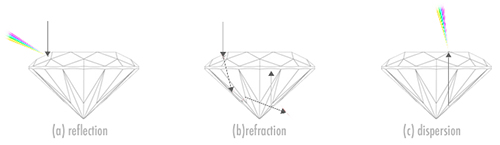
    A diamond is hard, clear, and structured. It reflects light sharply and stands under extreme pressure.

    In life, a “diamond-like” person:

    • Has strong boundaries
    • Is focused and disciplined
    • Is clear in decisions
    • Does not break easily under stress
    • Values strength and independence

    In career, diamond energy drives ambition and leadership.
    In health, it builds resilience.
    In relationships, it brings clarity and commitment.

    But too much diamond energy may lead to:

    • Rigidity
    • Emotional distance
    • Perfectionism
    • Difficulty expressing vulnerability

    Some people become so strong that they stop feeling. They shine, but they do not soften.


    Gold vs Diamond in Career, Relationships, and Health

    In Career

    • Gold supports collaboration.
    • Diamond supports leadership and vision.

    A successful professional life needs both: flexibility with firmness.

    In Relationships

    • Gold brings warmth and forgiveness.
    • Diamond brings loyalty and clear boundaries.

    Healthy love needs softness and strength together.

    In Health

    • Gold allows rest and healing.
    • Diamond builds discipline and consistency.

    Wellness is not about pushing too hard or surrendering completely. It is about intelligent balance.


    What Do You Prefer – Gold or Diamond?

    The real question is not what you prefer.
    The real question is: What does your life need right now?

    Sometimes you need to soften.
    Sometimes you need to strengthen.

    At Zaya Wellness, we guide our clients to identify where they are over-flexible and where they are overly rigid. True growth begins when you become aware of your dominant pattern.


    How to Find Your Balance

    Here are simple reflection questions:

    • Do I say “yes” when I want to say “no”? (Gold imbalance)
    • Do I avoid emotional conversations? (Diamond imbalance)
    • Do I struggle to adapt to change?
    • Do I feel drained from over-giving?

    Self-awareness is the first step toward emotional wellness.

    Through mindful practices, breathwork, energy alignment, and emotional coaching, we help you cultivate both golden warmth and diamond clarity.


    The Zaya Wellness Perspective

    Life does not reward only the strongest or only the softest.
    It rewards those who know when to shine gently and when to stand firm.

    Gold represents compassion.
    Diamond represents resilience.

    Your highest potential lies in integrating both.

    At Zaya Wellness, we believe true wellness is not about becoming someone else. It is about refining who you already are—just like gold purified in fire or a diamond formed under pressure.


    Final Thought

    So tell us…

    Are you gold?
    Are you diamond?
    Or are you learning to become both?

    If this reflection resonates with you, we invite you to explore deeper emotional alignment with us at Zaya Wellness.

    Because wellness is not about choosing one quality.
    It is about consciously shaping your inner strength.

  • At the Crossroads of Life: Choosing with Clarity, Courage, and Consciousness

    At the Crossroads of Life: Choosing with Clarity, Courage, and Consciousness

    Every one of us reaches a crossroads at some point in life.

    It may be about career.
    It may be about a relationship.
    It may be about health, purpose, or self-worth.

    At Zaya Wellness, we often meet people who feel stuck at these crossroads — confused, anxious, and afraid of making the “wrong” choice. If you are standing at such a point right now, take a deep breath. Crossroads are not punishments. They are invitations.


    What Does “Crossroads” Really Mean?

    A crossroads is a point where two or more paths meet. In life, it represents a decision-making moment — when continuing the same way is no longer possible.

    You might ask yourself:

    • Should I stay in this job or change my career?
    • Should I hold on to this relationship or let go?
    • Should I ignore my health or finally prioritise it?
    • Should I stay silent or express my truth?

    These moments can feel overwhelming. But they are also powerful turning points.


    Why Do Crossroads Feel So Difficult?

    Standing at a crossroads creates uncertainty. The human mind likes comfort and predictability. When faced with change, it triggers fear:

    • Fear of failure
    • Fear of judgment
    • Fear of loss
    • Fear of regret

    At Zaya Wellness, we guide our clients to understand that fear does not mean “stop.” Fear often means “growth is near.”

    Crossroads challenge your old identity and invite you to evolve.


    The Emotional Side of Being at a Crossroads

    Many people experience:

    • Restlessness
    • Sleeplessness
    • Self-doubt
    • Emotional confusion
    • Overthinking

    You may replay conversations in your head. You may imagine worst-case scenarios. You may seek constant advice but still feel unsure.

    This is natural.

    A crossroads shakes your comfort zone because it asks you to choose not just a path — but a version of yourself.


    How to Make the Right Decision at a Crossroads

    Here are simple and practical steps we recommend at Zaya Wellness:

    1. Pause Before You Decide

    Do not choose from panic. When emotions are high, clarity is low. Take time to calm your nervous system.

    2. Listen to Your Body

    Your body often knows before your mind does. Notice:

    • Does one option feel heavy?
    • Does another feel lighter and expansive?

    3. Separate Fear from Intuition

    Fear is loud and urgent.
    Intuition is calm and steady.

    Learning to identify this difference is life-changing.

    4. Imagine Your Future Self

    Ask yourself:

    • Five years from now, which decision will make me proud?
    • Which path aligns with my values?

    5. Accept That No Path Is Perfect

    Every road has challenges. The goal is not to avoid difficulty — it is to choose growth.


    Crossroads and Personal Growth

    Some of the most meaningful transformations begin at crossroads:

    • Leaving a toxic environment
    • Starting a new career
    • Setting boundaries
    • Choosing self-care
    • Healing old emotional wounds

    At Zaya Wellness, we believe that crossroads are spiritual checkpoints. They ask you:

    “Are you living on autopilot, or are you choosing consciously?”


    Signs You Are at a Crossroads in Life

    For SEO clarity and awareness, here are common signs:

    • Feeling stuck or uninspired
    • Constant inner conflict
    • Sudden life changes
    • Repeated patterns that no longer serve you
    • A deep desire for something more

    Recognising the signs is the first step toward conscious change.


    How Zaya Wellness Supports You at Your Crossroads

    At Zaya Wellness, we offer a safe space where you can:

    • Explore your fears without judgment
    • Gain clarity through guided reflection
    • Heal emotional blocks
    • Build confidence in decision-making
    • Strengthen your inner voice

    We do not tell you which path to choose. We help you discover the path that already feels true within you.


    Final Thoughts: Crossroads Are Not the End

    Standing at a crossroads does not mean you are lost. It means you are evolving.

    Every meaningful journey includes moments of uncertainty. The key is not choosing the “easiest” road — it is choosing the one aligned with your growth.

    If you are at a crossroads today, remember:

    You are not confused.
    You are transforming.

    And sometimes, the most beautiful chapters of life begin exactly where the old road ends.