Tag: holistic

  • Panchabhoota: Understanding the Five Elements of Life Through Yogic Philosophy

    Panchabhoota: Understanding the Five Elements of Life Through Yogic Philosophy

    In yogic philosophy, everything in the universe — including our body and mind — is made up of five basic elements. These elements are called Panchabhoota (Pancha = five, Bhoota = elements).

    At Zaya Wellness, we believe that true healing begins when we understand our connection with nature. The concept of Panchabhoota beautifully explains how deeply we are connected to the natural world.

    Let us explore this powerful wisdom in simple language.


    🌍 The Five Elements of Panchabhoota

    1️⃣ Earth (Prithvi) – The Element of Stability

    https://images.openai.com/static-rsc-3/3ZXnJw45PUhXCerVDsTaWn3oMOPQJnd9PKosAfP5mO2H1BG85MhEL1ijZnoNE3HgEC5PSTfxX3IveBA0nfCvkeR_dinNqKOcvN06MaeNC84?purpose=fullsize&v=1
    https://static1.squarespace.com/static/656f4e4dababbd7c042c4946/657236350931ee4538eea52c/66038737015c350a55b293a8/1712152878885/hand-positions-for-meditation-1x1.jpg?format=1500w
    https://artfactory.in/product_pictures/SW-CP188.jpg

    4

    The Earth element represents stability, strength, and grounding.
    In our body, it forms our bones, muscles, skin, and tissues.

    When Earth element is balanced:

    • We feel stable and secure.
    • We have physical strength.
    • We feel emotionally grounded.

    When it is imbalanced:

    • We may feel insecure or anxious.
    • We may feel physically weak or disconnected.

    How to balance it:

    • Walking barefoot on natural ground
    • Eating natural, whole foods
    • Practicing grounding meditation

    2️⃣ Water (Jala) – The Element of Flow

    https://images.openai.com/static-rsc-3/FofAL0WO4JNdCQ78TPG7QabHMNGJ-z-lHoIyt7ZSl1kMZHNwJb_yn988woZV6gHjT2Z53znJe2DCHsCUogJsEVWD7KQKyr9YuXm59ySge0M?purpose=fullsize&v=1
    https://png.pngtree.com/background/20250128/original/pngtree-person-doing-yoga-at-sunrise-on-a-dock-by-the-lake-picture-image_15943446.jpg
    https://images.openai.com/static-rsc-3/6MnODhyGkAbhXXyo3CVhY9IrdhzoALTgCbE6sTUzq61nDhlG-x0IiTzoyLaA7RxLViTZEI9vOWNgSAlObCL-nSpyC3_MlchjW-9MGvT41uM?purpose=fullsize&v=1

    4

    Water represents flow, adaptability, and emotions.
    Our blood, saliva, and body fluids are expressions of this element.

    When balanced:

    • We adapt easily.
    • Emotions flow naturally.
    • We feel connected and compassionate.

    When imbalanced:

    • Emotional overwhelm
    • Mood swings
    • Difficulty in letting go

    How to balance it:

    • Staying hydrated
    • Spending time near water
    • Practicing emotional expression

    3️⃣ Fire (Agni) – The Element of Transformation

    https://png.pngtree.com/thumb_back/fh260/background/20220530/pngtree-top-view-of-solar-power-plant-at-sunrisesunsetrenewable-energy-concept-photo-image_46382834.jpg
    https://images.openai.com/static-rsc-3/YeVRUw6Rb5PvBalVgprvIl7tq-vJmnYyec24SPM9oiZ1o_I9x8vjsMERgF1YBmxkm3f_5uPGrijdCR0i0w9KwbfXevBeB-ENOYjpG0GZJrQ?purpose=fullsize&v=1
    https://images.openai.com/static-rsc-3/w-hMx8H_bmZKP24jmWb8vZme29mHq8r3bQXw-QT5rW1nMomNMLxjAbPxIB3XSTuqAGNXdN-fCA7Cxqr4VA4qKPvmFUhfq_cI480pvFysWFs?purpose=fullsize&v=1

    4

    Fire symbolizes energy, digestion, and transformation.
    It governs metabolism and inner drive.

    When balanced:

    • Strong digestion
    • Clear decision-making
    • Motivation and passion

    When imbalanced:

    • Anger or irritation
    • Digestive issues
    • Burnout

    How to balance it:

    • Sun exposure (morning sunlight)
    • Breathing practices
    • Mindful eating

    4️⃣ Air (Vayu) – The Element of Movement

    https://images.openai.com/static-rsc-3/kAw-6-4l1NnIGxjBgAEimqZjgE0p9-MR9jnTGvWZ7ze2WS9U-0OqkDUQvLFgGIKAfs8In_FpHtskRdwh4XOVvUezbL_KuqGnyCQuc9aHME4?purpose=fullsize&v=1
    https://images.pond5.com/nature-background-sun-shining-through-footage-075994372_iconl.jpeg
    https://st2.depositphotos.com/1809585/7447/i/450/depositphotos_74472203-Woman-breathing-fresh-air-in-the-forest.jpg

    4

    Air represents movement, breath, and life force.
    It controls breathing, circulation, and nerve impulses.

    When balanced:

    • Clear thinking
    • Lightness in body
    • Creative ideas

    When imbalanced:

    • Anxiety
    • Restlessness
    • Overthinking

    How to balance it:

    • Pranayama (breathing exercises)
    • Slow, mindful movements
    • Spending time in fresh air

    5️⃣ Space (Akasha) – The Element of Consciousness

    https://images.openai.com/static-rsc-3/yeQTkrh9dTOeTMtOD2k3xM7Ll_WTC_nq_RQ1JOrcArSH7h-WA2WndZ5Y4YaF4eb3lorWf2NrTfzF1zaCH0DacAZbTys1BYHUg8l9jIJc7q4?purpose=fullsize&v=1
    https://dg.imgix.net/the-spiritual-discipline-of-sky-iptokbrp-en/landscape/the-spiritual-discipline-of-sky-iptokbrp-1dc8f54301afae386ac00041e83c1d41.jpg?fit=crop&h=1050&ixlib=rails-4.3.1&ts=1696349552&w=2000
    https://images.openai.com/static-rsc-3/gaKLdbunCuLTng_6BWhK5sjXCFWO8HmlmlZpnZXjwokI1Y1waLt0zRWp9-VVxioyuu3K-fpRSb43PqScVAnSwc0sKzKN16tbX_PlwyqlRHw?purpose=fullsize&v=1

    4

    Space is the most subtle element. It represents awareness, openness, and inner silence.

    It is the space within our body, mind, and the universe.

    When balanced:

    • We feel peaceful.
    • We experience clarity.
    • We feel spiritually connected.

    When imbalanced:

    • Feeling empty
    • Isolation
    • Lack of direction

    How to balance it:

    • Meditation
    • Silence practice
    • Journaling and reflection

    🌿 Why Panchabhoota Matters in Daily Life

    According to yogic philosophy, disease happens when these five elements go out of balance. Healing begins when we restore harmony.

    At Zaya Wellness, we guide our clients to:

    • Reconnect with nature
    • Understand their body signals
    • Practice mindful living
    • Align their inner elements

    When the five elements are balanced, life feels aligned — physically, emotionally, and spiritually.


    🌸 Simple Daily Panchabhoota Practice (Zaya Tip)

    Every day, try this simple routine:

    • Touch the earth (walk barefoot)
    • Drink clean water mindfully
    • Sit in morning sunlight
    • Take 10 conscious breaths
    • Spend 5 minutes in silence

    This small practice can slowly bring deep inner harmony.


    🌺 Final Thoughts

    Panchabhoota teaches us that we are not separate from nature — we are nature.

    When we respect the five elements within us, we automatically begin to live in balance.

    At Zaya Wellness, we believe that understanding ancient wisdom in simple ways can transform modern life.

    Are you ready to balance your five elements? 🌿✨

  • Chatting or Cheating? Understanding Emotional Boundaries in Modern Relationships

    Chatting or Cheating? Understanding Emotional Boundaries in Modern Relationships

    In today’s digital world, a simple message can start a meaningful connection — or slowly create distance in a relationship.

    At Zaya Wellness, we often hear this question from couples:
    “Is it just chatting… or is it cheating?”

    The answer is not always black and white. It depends on intention, emotional involvement, and honesty.

    Let’s understand this gently and clearly.


    What Is “Just Chatting”?

    Chatting is normal. We all talk to friends, colleagues, classmates, and even strangers online. Social media and messaging apps have made communication easy and constant.

    Healthy chatting:

    • Is open and transparent
    • Has no hidden intentions
    • Does not replace emotional intimacy with your partner
    • Would not make you uncomfortable if your partner read it

    Chatting becomes questionable when secrecy enters the space.


    When Does Chatting Turn Into Cheating?

    Cheating is not always physical. Sometimes, it begins emotionally.

    Emotional cheating can happen when:

    • You hide conversations from your partner
    • You share personal feelings with someone else instead of your partner
    • You seek validation, comfort, or attention outside your relationship
    • You delete chats to avoid being “caught”
    • You feel a romantic or sexual tension developing

    At Zaya Wellness, we say:
    If you have to hide it, it probably crosses a boundary.


    The Role of Emotional Boundaries in Relationships

    Every relationship has boundaries — spoken or unspoken.

    Healthy relationships thrive on:

    • Trust
    • Transparency
    • Respect
    • Emotional safety

    When chatting with someone else begins to replace your emotional connection with your partner, it creates distance. And distance, if ignored, can slowly damage trust.

    The key question is not:
    “Did I physically cheat?”

    The real question is:
    “Am I emotionally investing outside my relationship in a way that hurts my partner?”


    Why Do People Cross the Line?

    Sometimes it is not about wanting to cheat. It may come from:

    • Feeling ignored or unappreciated
    • Emotional loneliness
    • Seeking validation
    • Curiosity or boredom
    • Lack of communication in the relationship

    Instead of judging, we encourage awareness.

    At Zaya Wellness, we help individuals explore:

    • What emotional need is not being met?
    • What conversation are you avoiding with your partner?
    • What are you truly seeking?

    Because often, the issue is deeper than the chat.


    How to Protect Your Relationship in the Digital Age

    Here are simple relationship wellness tips:

    1. Define Boundaries Together

    Have an open discussion about what feels comfortable and what does not.

    2. Practice Emotional Honesty

    If you feel attracted or emotionally drawn to someone else, reflect before it grows.

    3. Strengthen Your Primary Connection

    Invest more in:

    • Quality time
    • Honest conversations
    • Appreciation
    • Physical and emotional intimacy

    4. Avoid Secret Spaces

    Secrecy is the breeding ground of mistrust.


    Chatting or Cheating? Ask Yourself These Questions

    Before labeling it, reflect:

    • Would I feel comfortable if my partner did the same?
    • Am I hiding this conversation?
    • Is this connection replacing my emotional bond at home?
    • Why do I need this interaction?

    Your honest answers will guide you.


    Final Thoughts from Zaya Wellness

    Relationships are not about controlling each other. They are about choosing each other — every day.

    In a world full of digital distractions, emotional loyalty matters more than ever.

    Chatting is human.
    Cheating is a choice.

    The line between the two is drawn by intention, honesty, and respect.

    At Zaya Wellness, we believe that healthy communication, emotional awareness, and clear boundaries can protect even the most vulnerable relationships.

    If you are confused, hurt, or unsure about your relationship dynamics, seeking guidance is not weakness — it is strength.

    Because love deserves clarity, not confusion. 💛

  • Psychic or Psycho? Understanding Intuition vs Mental Health — The Zaya Wellness Perspective

    Psychic or Psycho? Understanding Intuition vs Mental Health — The Zaya Wellness Perspective

    In today’s world, people often use words like “psychic” and “psycho” very casually. Sometimes, when someone talks about energy, intuition, or sensing something deeply, they are called psychic. Other times, when someone behaves emotionally or unpredictably, they are labeled as psycho.

    But are these terms understood correctly?

    At Zaya Wellness, we believe clarity creates healing. Let us explore the difference between intuition and mental health concerns, and why labeling can sometimes do more harm than good.


    What Does “Psychic” Really Mean?

    The word psychic is often used to describe someone who:

    • Feels energy deeply
    • Has strong intuition
    • Senses things before they happen
    • Is emotionally sensitive

    In many spiritual traditions, intuition is considered a natural human ability. It is that inner voice that guides you. It is not magic. It is awareness.

    However, sometimes intense emotional experiences, anxiety, trauma responses, or overthinking can be mistaken for intuition. Not every strong feeling is a psychic insight.

    At Zaya Wellness, we guide people to ask:

    “Is this calm inner knowing, or is this fear speaking?”

    True intuition feels steady and peaceful. Fear feels urgent and loud.


    What Does “Psycho” Mean?

    The word psycho is often used casually to describe someone who is emotionally unstable or behaving aggressively. But this term is hurtful and insensitive.

    Mental health challenges such as anxiety, depression, bipolar disorder, or trauma responses are real medical and psychological conditions. They are not personality flaws.

    Calling someone “psycho” creates stigma. It stops people from seeking help. It increases shame.

    At Zaya Wellness, we promote compassion over judgment.


    Intuition vs Mental Health: How to Know the Difference

    Here are some simple differences:

    IntuitionEmotional Distress
    Feels calm and clearFeels overwhelming and chaotic
    Comes without panicComes with fear or anxiety
    Does not disturb sleepDisturbs daily functioning
    Feels groundedFeels disconnected from reality

    If your experiences are:

    • Causing fear
    • Affecting sleep
    • Creating relationship problems
    • Making daily life difficult

    It is important to seek professional support.

    There is no shame in therapy. There is strength in awareness.


    Why Labels Can Be Dangerous

    Using words like “psychic” or “psycho” without understanding can:

    • Create confusion
    • Increase stigma around mental health
    • Encourage spiritual bypassing
    • Prevent proper treatment

    At Zaya Wellness, we believe in balance. Spiritual growth and psychological stability go hand in hand.

    Being intuitive does not mean ignoring mental health.
    Having mental health struggles does not mean you are “crazy.”


    The Zaya Wellness Approach

    We help our clients:

    • Develop grounded intuition
    • Build emotional awareness
    • Heal trauma safely
    • Understand the difference between fear and inner wisdom

    We believe that true spirituality feels peaceful.
    True healing feels stable.

    If something feels overwhelming, confusing, or frightening — it is not a “gift.” It is a sign that support is needed.


    Final Thoughts: Choose Awareness Over Labels

    Instead of asking, “Am I psychic or psycho?”
    Ask:

    • Am I regulated or overwhelmed?
    • Am I grounded or anxious?
    • Do I feel peace or panic?

    Your mind and your spirit deserve respect.

    At Zaya Wellness, we encourage conscious living, mental health awareness, and compassionate understanding. Because healing begins when judgment ends.

  • The People We Meet: Lessons, Mirrors & Turning Points in Life

    The People We Meet: Lessons, Mirrors & Turning Points in Life

    Have you ever wondered why certain people enter your life at a particular time?

    Some stay forever.
    Some stay for a season.
    Some leave quietly after teaching us something powerful.

    At Zaya Wellness, we believe the people we meet are not random. They are reflections, lessons, catalysts, and sometimes even healers. Each person we encounter shapes our journey — whether in career, relationships, health, or personal growth.

    Let us explore what “the people we meet” truly mean in the journey of life.


    1. The Mirrors: People Who Reflect Us

    Some people trigger us.
    Some inspire us.
    Some make us uncomfortable.

    These people are often mirrors.

    They reflect parts of ourselves we may not fully see — our strengths, fears, insecurities, talents, or unresolved emotions.

    If someone’s success makes you feel insecure, it may reveal your hidden desire.
    If someone’s calmness inspires you, it may reflect your inner potential for peace.

    At Zaya Wellness, we gently guide our clients to ask:
    “What is this person showing me about myself?”

    Growth begins when we stop blaming and start observing.


    2. The Teachers: People Who Challenge Us

    Not all teachers come with kindness. Some arrive as conflict.

    A difficult boss may teach you boundaries.
    A failed relationship may teach self-respect.
    A health scare may introduce discipline.

    Life sends teachers in human form.

    Instead of asking, “Why is this happening to me?”
    Try asking, “What is this here to teach me?”

    This simple shift can transform pain into wisdom.


    3. The Supporters: People Who Hold Space

    Some people feel like home.

    They don’t try to fix you.
    They don’t judge you.
    They simply hold space.

    These connections are reminders that love, compassion, and safety exist in this world.

    At Zaya Wellness, we deeply value conscious relationships — the ones that nurture emotional health and personal expansion.

    If you have even one such person in your life, you are blessed.


    4. The Temporary Guests: People Who Come for a Season

    Not everyone is meant to stay forever.

    And that is okay.

    Some people walk with us only during certain phases — college friends, co-workers, neighbors, clients. When the chapter ends, so does the connection.

    Holding on to expired relationships creates suffering.
    Letting go creates freedom.

    Life moves in chapters. So do people.


    5. The Catalysts: People Who Change Our Direction

    Sometimes one person changes everything.

    A mentor who encourages your career shift.
    A doctor who helps you prioritize health.
    A stranger whose words awaken your purpose.

    These people become turning points.

    Their role may be brief — but their impact is permanent.


    6. What If Everyone Has a Role?

    When we begin to see life this way, resentment reduces.

    Instead of labeling people as “good” or “bad,” we start seeing them as:

    • Teachers
    • Mirrors
    • Supporters
    • Catalysts
    • Companions

    This mindset brings emotional maturity.

    At Zaya Wellness, we encourage mindful reflection:

    • Who entered your life this year?
    • What did they awaken in you?
    • What part of you evolved because of them?

    7. How This Applies to Career, Relationships & Health

    In Career

    The colleague who competes with you may build your resilience.
    The leader who trusts you may build your confidence.

    In Relationships

    A heartbreak may strengthen self-worth.
    A loving partner may teach emotional safety.

    In Health

    A health challenge may introduce discipline and self-care.
    A wellness mentor may inspire transformation.

    Every interaction contributes to your growth story.


    The Zaya Wellness Perspective 🌿

    We believe healing is not only about techniques.
    It is about awareness.

    When you understand the role of the people you meet, you stop resisting life.

    You start observing.
    You start learning.
    You start evolving.

    The people we meet are chapters in our soul’s journey.

    Some write joy.
    Some write pain.
    But all write growth.


    Final Reflection

    What if nothing is accidental?

    What if every connection is part of your evolution?

    Instead of asking, “Why did this person enter my life?”
    Ask, “What part of me is ready to grow?”

    And that question alone can change everything.


    ✨ At Zaya Wellness

    We help you understand patterns, relationships, emotions, and life transitions with clarity and compassion. If you are navigating difficult connections or seeking deeper meaning in your experiences, we are here to support your journey.

    Because sometimes, the most important person you meet…
    is the version of yourself you are becoming.

  • Panchabhoota in Fingers: Understanding the Five Elements Through Your Hands

    Panchabhoota in Fingers: Understanding the Five Elements Through Your Hands

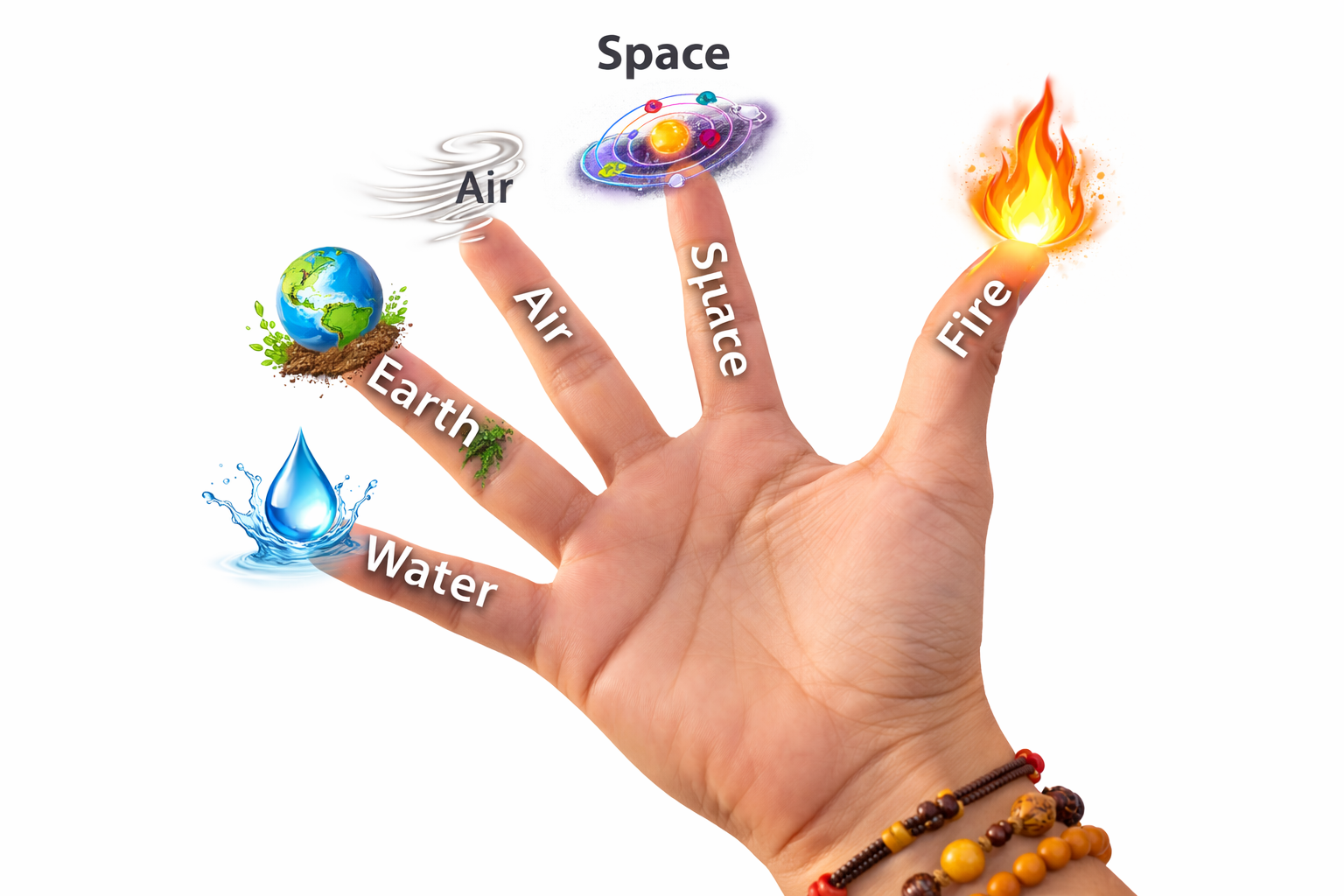
    In yogic philosophy, our body is not just flesh and bones. It is made up of five powerful elements known as Panchabhoota — Earth, Water, Fire, Air, and Space. These elements are not just in nature; they exist within us.

    At Zaya Wellness, we believe that when you understand these five elements in your body, you begin to understand your emotions, health, and energy patterns better.

    One of the simplest ways to connect with these elements is through your fingers.

    ✋ The Five Elements in Your Fingers (Hasta Mudra Science)

    According to yogic science:

    • Thumb – Fire (Agni)
    • Index Finger – Air (Vayu)
    • Middle Finger – Space (Akasha)
    • Ring Finger – Earth (Prithvi)
    • Little Finger – Water (Jala)

    Each finger represents an element, and when we gently join fingers in specific ways (called mudras), we influence that element inside our body.

    Let’s understand this in simple language.


    🔥 Thumb – Fire Element (Agni)

    The thumb represents Fire, which governs:

    • Digestion
    • Metabolism
    • Confidence
    • Transformation
    • Willpower

    If you feel low energy, dull digestion, or lack of motivation, your fire element may need balance.

    In yogic practice, the thumb plays a major role in activating or balancing other elements.


    🌬 Index Finger – Air Element (Vayu)

    The index finger represents Air, which governs:

    • Movement in the body
    • Thoughts
    • Nervous system
    • Anxiety levels

    Too much air may show up as overthinking or restlessness. Too little may feel like mental dullness.

    Balancing this element helps calm the mind.


    🌌 Middle Finger – Space Element (Akasha)

    The middle finger represents Space, the element of expansion and openness.

    It governs:

    • Emotional space
    • Communication
    • Spiritual connection
    • Inner awareness

    When balanced, you feel spacious inside. When imbalanced, you may feel isolated or disconnected.


    🌍 Ring Finger – Earth Element (Prithvi)

    The ring finger represents Earth, the element of stability.

    It governs:

    • Strength
    • Immunity
    • Groundedness
    • Physical structure

    If you feel weak, insecure, or unstable, strengthening this element can help bring balance.


    💧 Little Finger – Water Element (Jala)

    The little finger represents Water, which governs:

    • Emotions
    • Relationships
    • Fluid balance
    • Creativity

    Too much water can make you overly emotional. Too little can make you feel emotionally dry or disconnected.


    🧘 How Mudras Work

    https://images.openai.com/static-rsc-3/uTGdQB-FOm-1OUfvk74CD5vZju8BeYG7DNaPg8OsF_7MgOPXREtVChJRILNiXZwL9dbwY2Uv__dxXHywyNOjLtpLS4mwsRlg_8joXAHhQAM?purpose=fullsize&v=1
    https://images.openai.com/static-rsc-3/yUBOz94HBS_pCQXR6mZTGP4CAwGI_QQwWT4ueV-rGVkK58IvPXjxg1IeD7WkTagF1fNmLstJWKJWLQKNYzDCfOTGvBtkwoZ8lRN-RMUIw78?purpose=fullsize&v=1
    https://images.openai.com/static-rsc-3/0Fe513gWFT7ADlRvIdstFEycDA2IjJ0gPbcOA47MJt83zt6z_22xWcFz7jLMymqU0eQGA0PtC2b7d2Fw2iWddCnDv2bL9uYqnqN515TLiVQ?purpose=fullsize&v=1

    When you gently touch specific fingers to the thumb, you either increase or reduce certain elements in your body.

    For example:

    • Gyan Mudra (Index + Thumb) – Balances Air and improves focus.
    • Prithvi Mudra (Ring + Thumb) – Strengthens Earth element and vitality.
    • Varun Mudra (Little + Thumb) – Balances Water and emotions.

    These are subtle practices, but consistent use can bring noticeable calmness and balance.


    🌿 Why This Matters in Modern Life

    Today, many of us struggle with:

    • Stress
    • Emotional imbalance
    • Low energy
    • Overthinking

    Yogic wisdom tells us these are simply signs of elemental imbalance.

    At Zaya Wellness, we guide individuals to reconnect with their inner elements — not just through theory, but through awareness and simple daily practices.

    Your hands are always with you. Through them, you carry the wisdom of the universe.


    ✨ A Simple Practice to Start

    Sit comfortably.
    Close your eyes.
    Join your thumb and index finger (Gyan Mudra).
    Take 10 slow breaths.

    Just observe.

    You may begin to feel subtle shifts — calmness, clarity, stillness.

    This is the power of Panchabhoota within you.


    🌸 Final Thoughts from Zaya Wellness

    The five elements are not abstract ideas. They are living energies within you.

    When you understand your fingers, you understand your nature.
    When you balance your elements, you balance your life.

    And sometimes, healing begins with something as simple as how you place your hands.

  • 🏆 Topper Syndrome: When Success Becomes Silent Pressure

    🏆 Topper Syndrome: When Success Becomes Silent Pressure

    At Zaya Wellness, we often meet individuals who seem to “have it all together.” They were school toppers, high achievers, gold medalists, and always the first choice in every competition. But behind the certificates and applause, many of them silently struggle with something we call Topper Syndrome.

    Let’s understand what it really means.


    What Is Topper Syndrome?

    Topper Syndrome is not a medical diagnosis, but a psychological pattern often seen in high achievers. It happens when a person starts believing that their worth depends only on their performance.

    For years, they were appreciated for marks, ranks, and achievements. Slowly, success becomes their identity. And failure? It feels like a personal rejection.

    Over time, this creates:

    • Fear of failure
    • Constant pressure to outperform
    • Anxiety before results
    • Difficulty handling criticism
    • Burnout and emotional exhaustion

    The very thing that once brought happiness — achievement — now becomes a source of stress.


    Signs You Might Be Experiencing Topper Syndrome

    At Zaya Wellness, we encourage self-awareness. Here are some common signs:

    • You feel anxious even when you perform well.
    • You compare yourself constantly with others.
    • You struggle to enjoy achievements.
    • You avoid trying new things due to fear of not being “the best.”
    • You feel guilty when you rest.

    If this sounds familiar, you’re not alone.


    Why Does Topper Syndrome Happen?

    From childhood, many toppers receive appreciation mainly for results. Phrases like:

    • “You are the smartest.”
    • “We expect great things from you.”
    • “Don’t lose your rank.”

    While these words are meant to motivate, they can slowly build invisible pressure.

    The child learns:
    👉 “I am loved when I succeed.”
    👉 “I am valued when I perform.”

    Over time, self-worth becomes tied to performance.


    The Hidden Emotional Impact

    Topper Syndrome may lead to:

    • Perfectionism
    • Imposter feelings
    • Fear of disappointing others
    • Difficulty accepting average performance
    • Low emotional resilience

    Ironically, many toppers struggle deeply when they enter competitive environments like college or workplace, where everyone was a “topper” once.

    At Zaya Wellness, we remind our clients: You are more than your marks, medals, or milestones.


    How to Heal from Topper Syndrome

    Healing starts with shifting your mindset. Here are simple steps we suggest:

    1️⃣ Separate Identity from Achievement

    You achieved success. You are not success itself.

    2️⃣ Redefine Failure

    Failure is feedback, not a verdict on your worth.

    3️⃣ Practice Self-Compassion

    Talk to yourself the way you would talk to a friend.

    4️⃣ Allow Yourself to Be Human

    Rest. Make mistakes. Try something where you’re not the best.

    5️⃣ Focus on Growth, Not Ranking

    Instead of asking, “Am I better than others?”
    Ask, “Am I better than I was yesterday?”


    Success Without Self-Pressure

    True success is not about always standing first. It is about feeling peaceful, confident, and emotionally balanced.

    At Zaya Wellness, we guide individuals to move from performance-based self-worth to purpose-based living.

    Because life is not a rank list.

    It is a journey of growth, learning, and self-discovery.


    Final Thought

    If you have always been “the topper,” it’s okay to feel tired. It’s okay to feel uncertain. And it’s absolutely okay to not always win.

    Your value does not decrease when your performance does.

    And sometimes, the greatest success is learning to live without constant pressure.

    🌿 With awareness and compassion,
    Team Zaya Wellness

  • 🎵 Music Is My Life: How Music Heals the Mind, Body, and Soul

    🎵 Music Is My Life: How Music Heals the Mind, Body, and Soul

    At Zaya Wellness, we often hear people say, “Music is my life.”
    But have you ever paused to ask yourself why music feels so powerful?

    Music is not just sound. It is emotion. It is memory. It is healing. It is connection. For many of us, music becomes a silent therapist, a safe space, and sometimes even a lifeline.

    In this blog, we explore how music supports mental health, emotional healing, and overall well-being.


    🎶 Why Do We Say “Music Is My Life”?

    When someone says music is my life, it usually means:

    • Music helps them express feelings they cannot put into words
    • Music supports them during difficult times
    • Music lifts their mood instantly
    • Music connects them with others
    • Music gives them purpose and inspiration

    Music becomes a companion in joy, heartbreak, stress, and celebration.

    At Zaya Wellness, we believe music is a powerful tool for emotional balance and inner harmony.


    🧠 The Science Behind Music and Mental Health

    Research shows that music can:

    • Reduce stress and anxiety
    • Lower cortisol (stress hormone) levels
    • Improve focus and concentration
    • Support better sleep
    • Trigger the release of dopamine (the “feel-good” hormone)

    When you listen to music you love, your brain responds in the same way it responds to something deeply rewarding.

    This is why music therapy is widely used in emotional healing practices.


    💖 Music as Emotional Healing

    Sometimes we carry emotions that feel heavy — sadness, anger, fear, loneliness.

    Music allows us to:

    • Cry safely
    • Feel understood
    • Release tension
    • Reflect deeply
    • Regain hope

    At Zaya Wellness, we often encourage mindful listening — not just playing music in the background, but truly feeling it. Notice how your body responds. Notice how your breathing changes. Notice what emotions rise and fall.

    Music helps emotions move. And when emotions move, healing begins.


    🎼 Music and Self-Expression

    You don’t have to be a professional singer or musician to benefit from music.

    • Humming can calm your nervous system
    • Singing boosts confidence
    • Playing an instrument improves focus
    • Writing lyrics helps process emotions

    Music gives your inner voice a safe platform.

    When words fail, melodies speak.


    🌿 How to Use Music for Wellness

    Here are simple ways to bring music into your daily life:

    1️⃣ Start Your Day with Uplifting Music

    Choose songs that energize and inspire you.

    2️⃣ Create an Emotional Release Playlist

    Have a playlist for when you need to cry, reflect, or reset.

    3️⃣ Practice Mindful Listening

    Sit quietly. Close your eyes. Listen deeply.

    4️⃣ Use Soft Music Before Sleep

    Gentle instrumental music can improve sleep quality.

    5️⃣ Try Sound Healing or Music Therapy

    Explore guided sound sessions for deeper emotional work.


    🎧 Music Is More Than Entertainment

    Music is vibration. And we are also vibration.

    When you surround yourself with music that aligns with your emotional state or your desired state, you gently shift your energy.

    At Zaya Wellness, we see music as a bridge — between stress and calm, pain and release, chaos and clarity.


    🌸 Final Thoughts: Let Music Be Your Medicine

    If you often say, “Music is my life,” honor that connection.

    Music has the power to:

    • Comfort you
    • Strengthen you
    • Transform you
    • Heal you

    Let it become a conscious part of your self-care routine.

    Because sometimes, healing does not begin with words.

    It begins with a song. 🎵

  • “I Love You” – Three Words That Can Heal, Transform, and Strengthen Relationships

    “I Love You” – Three Words That Can Heal, Transform, and Strengthen Relationships

    In a world full of noise, deadlines, and distractions, three simple words still carry the greatest emotional power: “I Love You.”

    At Zaya Wellness, we believe that love is not just a romantic expression. It is an emotional energy that nurtures relationships, heals wounds, builds trust, and strengthens mental well-being. But have you ever paused to truly understand what “I love you” really means?

    Let us explore the deeper meaning behind these powerful words.


    What Does “I Love You” Really Mean?

    When someone says “I love you,” it is more than a sentence. It means:

    • I see you.
    • I accept you.
    • I value you.
    • I choose you.

    True love is not about perfection. It is about acceptance. It is about staying present even during misunderstandings, disagreements, and difficult phases.

    At Zaya Wellness, we often remind our clients that love is not only a feeling — it is a conscious choice made every day.


    The Emotional Power of Saying “I Love You”

    Many people feel love but hesitate to express it. Sometimes it is ego. Sometimes it is fear of rejection. Sometimes we assume the other person already knows.

    But spoken love has a powerful psychological impact.

    When you say “I love you”:

    • It creates emotional security.
    • It reduces anxiety in relationships.
    • It builds trust.
    • It strengthens emotional connection.

    Hearing these words activates feelings of safety and belonging. And feeling safe is the foundation of mental wellness.


    Love Is Not Limited to Romance

    When we hear “I love you,” we often think of romantic partners. But love is much broader.

    You can say “I love you” to:

    • Your parents
    • Your children
    • Your friends
    • Your siblings
    • Even yourself

    Yes, self-love matters just as much.

    At Zaya Wellness, we encourage self-compassion practices where individuals look into the mirror and gently say, “I love you” to themselves. It may feel awkward at first, but over time, it heals deep emotional wounds.


    Why Do People Struggle to Say “I Love You”?

    Many adults grow up in environments where love was felt but rarely spoken. Emotional expression was limited. As a result:

    • Some people show love through actions, not words.
    • Some fear vulnerability.
    • Some associate love with pain or past heartbreak.

    Understanding your emotional background helps you express love more freely.

    Love is not weakness. It is emotional strength.


    “I Love You” and Emotional Healing

    These three words can:

    • Repair damaged relationships.
    • Soften anger.
    • Reduce emotional distance.
    • Encourage forgiveness.

    However, love must be genuine. Forced or habitual expressions lose their meaning. Speak it with awareness. Speak it with presence.

    At Zaya Wellness, we guide individuals and couples to communicate love mindfully — not as a routine phrase, but as a conscious emotional connection.


    Practical Ways to Express Love Daily

    Love is not just said. It is shown.

    Here are simple ways to express love:

    • Listen without interrupting.
    • Offer appreciation.
    • Apologize sincerely.
    • Spend quality time.
    • Send a thoughtful message.
    • Offer a warm hug.

    And when you say “I love you,” mean it.


    Loving Yourself First

    You cannot pour from an empty cup.

    Before expecting others to fill your emotional needs, start by loving yourself:

    • Respect your boundaries.
    • Forgive your mistakes.
    • Speak kindly to yourself.
    • Prioritize your mental health.

    When you love yourself, you teach others how to love you.

    At Zaya Wellness, we believe that healthy relationships begin with a healthy relationship with yourself.


    Final Thoughts

    “I love you” is not just a phrase. It is a commitment. A reassurance. A healing balm.

    Say it when you feel it.
    Say it without ego.
    Say it without delay.

    Because sometimes, those three words can change someone’s entire day — or even their life.

    With warmth and awareness,
    Team Zaya Wellness

  • Loneliness: When You Feel Alone Even in a Crowd

    Loneliness: When You Feel Alone Even in a Crowd

    At Zaya Wellness, we often meet people who say, “I am surrounded by people, yet I feel lonely.” Loneliness is not just about being physically alone. It is a deep emotional experience of feeling disconnected, unseen, or misunderstood.

    In today’s fast-paced world, loneliness has become more common than ever. But the good news is — it can be understood, managed, and healed.


    What Is Loneliness?

    Loneliness is the emotional pain we feel when our need for connection is not met. You can feel lonely in a crowded room, in a relationship, or even within your own family.

    It is important to understand that:

    • Loneliness is a feeling, not a weakness.
    • It does not mean you are unlovable.
    • It is a signal that your heart needs connection.

    At Zaya Wellness, we see loneliness as a message — not a life sentence.


    Why Do We Feel Lonely?

    There are many reasons behind loneliness:

    1. Emotional Disconnection

    You may talk to many people, but if no one truly understands your feelings, loneliness grows.

    2. Life Transitions

    Moving to a new city, changing jobs, losing a loved one, or ending a relationship can create emotional gaps.

    3. Social Media Illusion

    Scrolling through perfect-looking lives can make you feel left out or “not enough.”

    4. Suppressed Emotions

    When you don’t express your real feelings, you start feeling invisible — even to yourself.


    Signs You May Be Experiencing Loneliness

    • Feeling empty without knowing why
    • Overthinking conversations
    • Craving connection but avoiding social interaction
    • Feeling tired even without physical work
    • Constant need for distraction

    If these signs feel familiar, know that you are not alone in your loneliness.


    The Emotional Impact of Loneliness

    Long-term loneliness can affect:

    • Mental health (anxiety, low mood)
    • Physical health (sleep problems, low immunity)
    • Self-esteem and confidence
    • Relationships

    At Zaya Wellness, we believe loneliness is not something to hide — it is something to gently explore and heal.


    How to Cope With Loneliness in a Healthy Way

    1. Start With Self-Connection

    Before seeking connection outside, build a connection with yourself. Journaling, meditation, or mindful breathing can help.

    2. Express, Don’t Suppress

    Talk to someone you trust. Even one honest conversation can reduce emotional distance.

    3. Reduce Comparison

    Remember, social media shows highlights, not reality.

    4. Create Meaningful Routines

    Join a class, volunteer, or learn something new. Shared activities build natural connections.

    5. Seek Professional Support

    Sometimes loneliness has deeper roots. Therapy or emotional wellness sessions can help you understand and heal it.

    At Zaya Wellness, we guide you to move from “I am alone” to “I am connected — first with myself, then with the world.”


    The Hidden Gift of Loneliness

    Loneliness can also be a turning point. It can:

    • Help you discover your true needs
    • Teach emotional independence
    • Strengthen your inner voice
    • Build deeper, more meaningful relationships

    When handled consciously, loneliness becomes self-awareness.


    Final Thoughts

    Loneliness is a human experience. It does not define you. It simply tells you that your heart needs nurturing.

    At Zaya Wellness, we believe healing begins the moment you acknowledge how you feel. You deserve connection. You deserve understanding. And most importantly, you deserve to feel seen — including by yourself.

    If you are struggling with loneliness, remember: reaching out is not weakness. It is courage.

  • Observer Created Reality: Are You Shaping Your World Without Realizing It?

    Observer Created Reality: Are You Shaping Your World Without Realizing It?

    At Zaya Wellness, we often remind our clients of one simple truth: The way you see the world shapes the way you experience it.

    The idea of observer created reality suggests that reality is not just something happening outside of you — it is deeply influenced by your thoughts, beliefs, emotions, and awareness.

    But what does that really mean? And how does it affect your everyday life?

    Let’s explore this powerful concept in simple language.


    What Is Observer Created Reality?

    The concept of observer created reality comes from both modern science and ancient spiritual wisdom. It suggests that the act of observing something influences how it appears.

    In simple terms:

    Your attention, beliefs, and expectations shape your experience.

    When two people go through the same situation, they often experience it differently. Why? Because each person interprets the event through their own mental and emotional lens.

    Your mind is not just watching reality — it is participating in it.


    The Science Behind It

    In quantum physics, experiments like the Observer Effect show that particles behave differently when they are observed. While this does not mean we magically control everything, it does suggest that observation plays a role in how outcomes unfold.

    On a psychological level, this is even clearer:

    • If you believe people are unkind, you notice rude behavior more.
    • If you believe opportunities are everywhere, you start spotting them.
    • If you expect failure, you unconsciously act in ways that limit success.

    Your brain filters reality based on your beliefs.

    This is known as cognitive bias — and it influences how you experience life every day.


    Observer Created Reality in Daily Life

    Let’s bring this concept down to earth.

    1. Relationships

    If you believe your partner doesn’t care, you may interpret neutral actions as rejection. That belief then shapes your reaction — which affects the relationship.

    2. Health

    If you constantly focus on fear, stress hormones rise. Over time, this affects your physical health. But when you focus on safety and calm, your nervous system relaxes.

    3. Self-Image

    If you see yourself as capable, you take bold steps. If you see yourself as weak, you avoid challenges.

    Your internal world creates your external experience.


    Ancient Wisdom and Observer Consciousness

    Long before modern science, yogic and spiritual traditions spoke about the power of awareness.

    In yogic philosophy, the concept of the “Sakshi” (the witness consciousness) teaches us to observe thoughts without becoming them. When you become the observer rather than the reactor, your reality shifts.

    Instead of:
    “I am anxious.”

    You begin to say:
    “I notice anxiety.”

    That small shift changes everything.


    Are We Completely Creating Reality?

    It is important to be balanced here.

    Observer created reality does not mean:

    • You are responsible for every bad event.
    • You can control everything with thoughts alone.
    • Life is an illusion.

    It simply means:
    You influence your experience through perception.

    External events happen. But your response — and the meaning you give them — shapes your personal reality.


    How to Consciously Shape Your Reality

    At Zaya Wellness, we guide our clients to gently reclaim their observer power through practical tools:

    1. Mindfulness Practice

    Observe your thoughts daily. Ask:

    • What story am I telling myself?
    • Is this belief helping me or limiting me?

    2. Breath Awareness

    Slow breathing regulates the nervous system. A calm mind sees reality more clearly.

    3. Reframing

    Instead of asking:
    “Why is this happening to me?”

    Try:
    “What is this teaching me?”

    4. Gratitude Focus

    What you focus on grows. When you consciously notice small positives, your brain rewires to detect more of them.


    The Responsibility and the Freedom

    The idea of observer created reality is empowering.

    It means:

    • You are not helpless.
    • Your awareness matters.
    • Small inner shifts create outer change.

    When you change your perception, your behavior changes.
    When your behavior changes, your life direction changes.

    This is not magic. It is conscious living.


    A Gentle Reflection

    Pause for a moment.

    What belief are you holding right now about your life?

    Is it expanding your world — or shrinking it?

    At Zaya Wellness, we believe that true wellness begins when you realize that you are not just living in reality… you are participating in its creation.

    And when you become a conscious observer, your world becomes clearer, calmer, and more aligned with your true self.


    Final Thought

    You may not control every event.
    But you always have influence over how you see it.

    And sometimes, that is enough to transform everything.